Every year, in some revenue meeting, someone points at the GDS line on the distribution report and asks: “Do we still need this?” The green-screen terminals and travel-agent workflows feel like a relic from before the internet ate travel. And yet the fees keep getting paid, and for some hotels the bookings keep coming.
So here’s the honest 2026 answer, up front: it depends entirely on your segment. For a corporate or airport hotel, the GDS is still a workhorse. For a leisure independent or resort, it may be a fee you’re paying for almost nothing. This guide shows you which one you are — and how to decide.
Everyone says GDS is dying, and everyone in corporate travel still books through it. We pay every month and honestly can’t tell if a single booking comes from it.
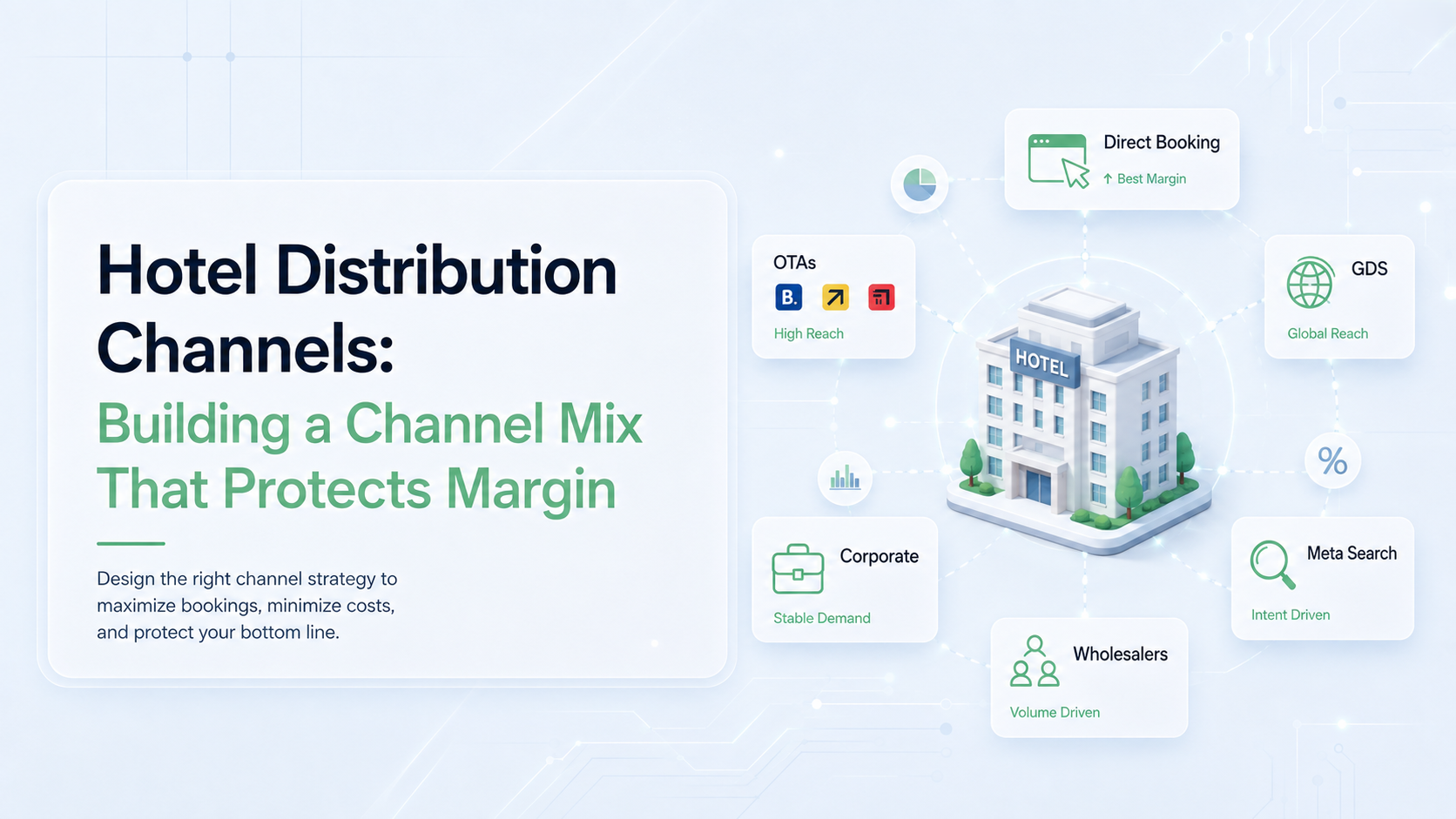
Quick scope note: the GDS is one channel in your wider distribution channels mix. This post is the GDS deep-dive — what it is, what it costs, and whether it still earns its place.
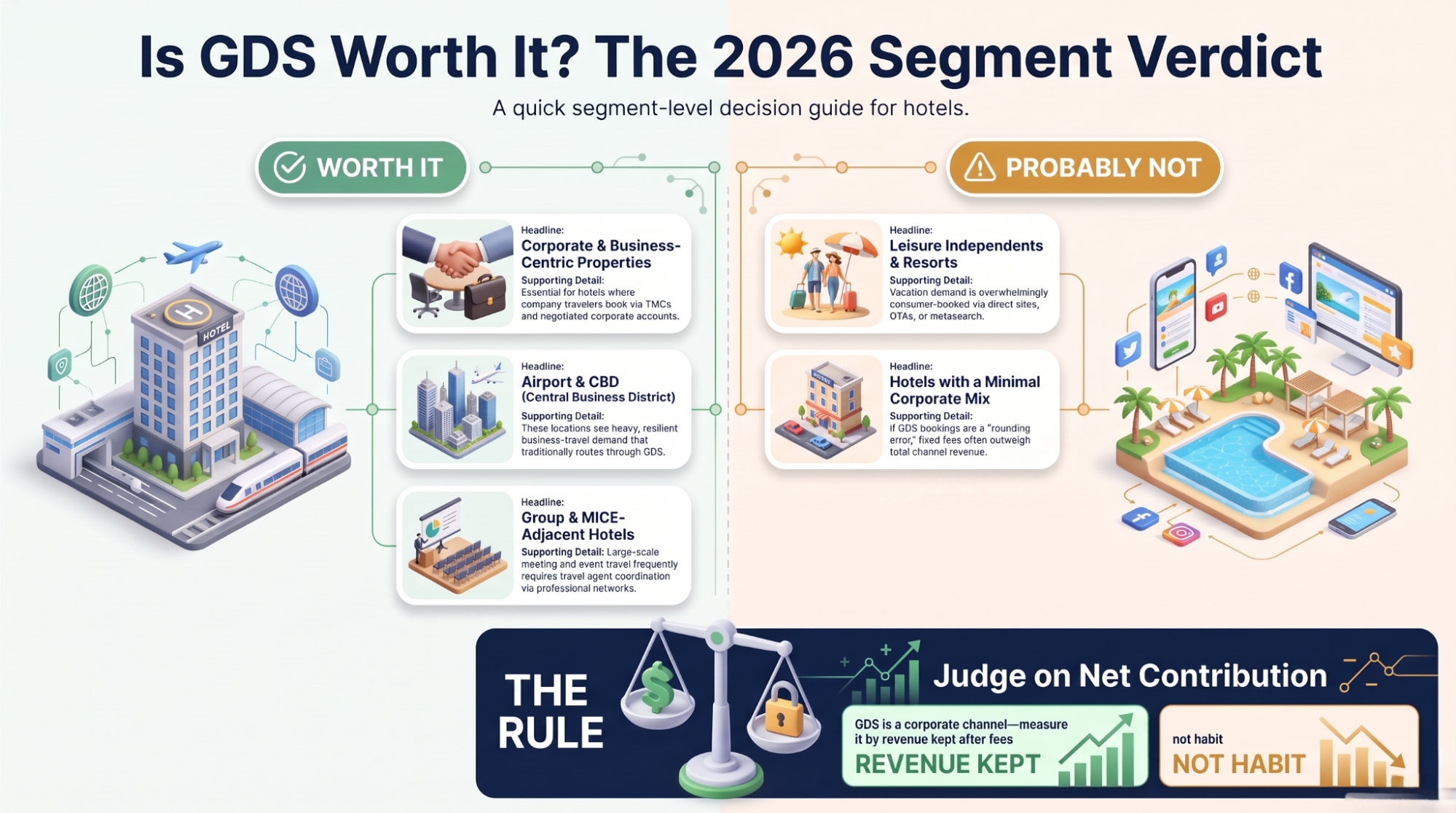
SNIPPET DEFINITION — A GDS (global distribution system) is a network — chiefly Sabre, Amadeus, and Travelport — that connects hotels to travel agents and corporate travel bookers, who search and book rooms through it. Whether it’s worth it in 2026 depends on your segment: for corporate, airport, and business-travel hotels it remains a valuable channel; for leisure independents and resorts with little corporate demand, the fees often outweigh the bookings. Judge it on net contribution, not habit.
Key takeaways
- A GDS connects hotels to travel agents and corporate bookers, not consumers.
- Sabre, Amadeus, and Travelport are the main systems.
- Whether it’s worth it is a segment question, not a yes/no for all hotels.
- Corporate and airport hotels usually need it; leisure resorts usually don’t.
- Judge GDS on its net contribution, not on tradition or fear of cutting it.
What is a GDS in hotels?
The key thing to understand is who’s on the other end. A GDS doesn’t reach leisure travelers browsing on their phones — that’s what OTAs and metasearch do. It reaches professional bookers, which is exactly why it lives or dies on your corporate mix.
How hotel GDS distribution works
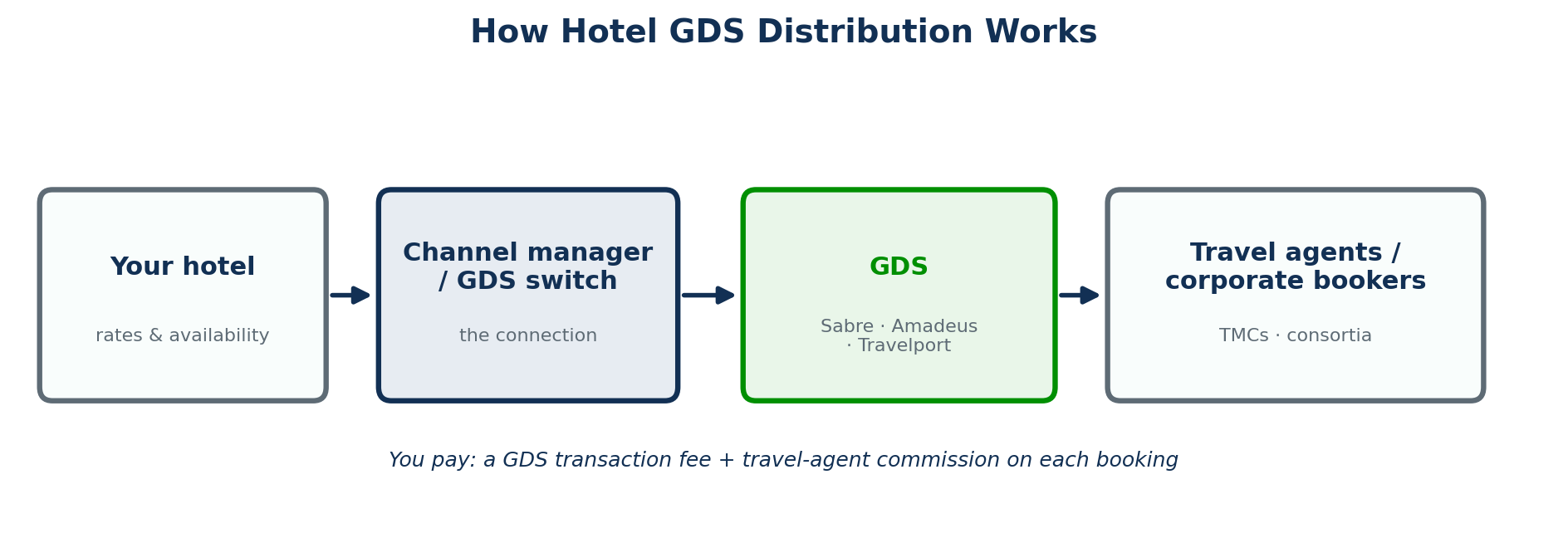
You don’t connect to the GDS directly — you connect through a channel manager or GDS switch that pushes your rates and availability into Sabre, Amadeus, and Travelport. A travel agent or corporate booker then sees your hotel in their terminal, books it, and you pay a GDS transaction fee plus a commission to the travel agent.
What GDS actually costs a hotel
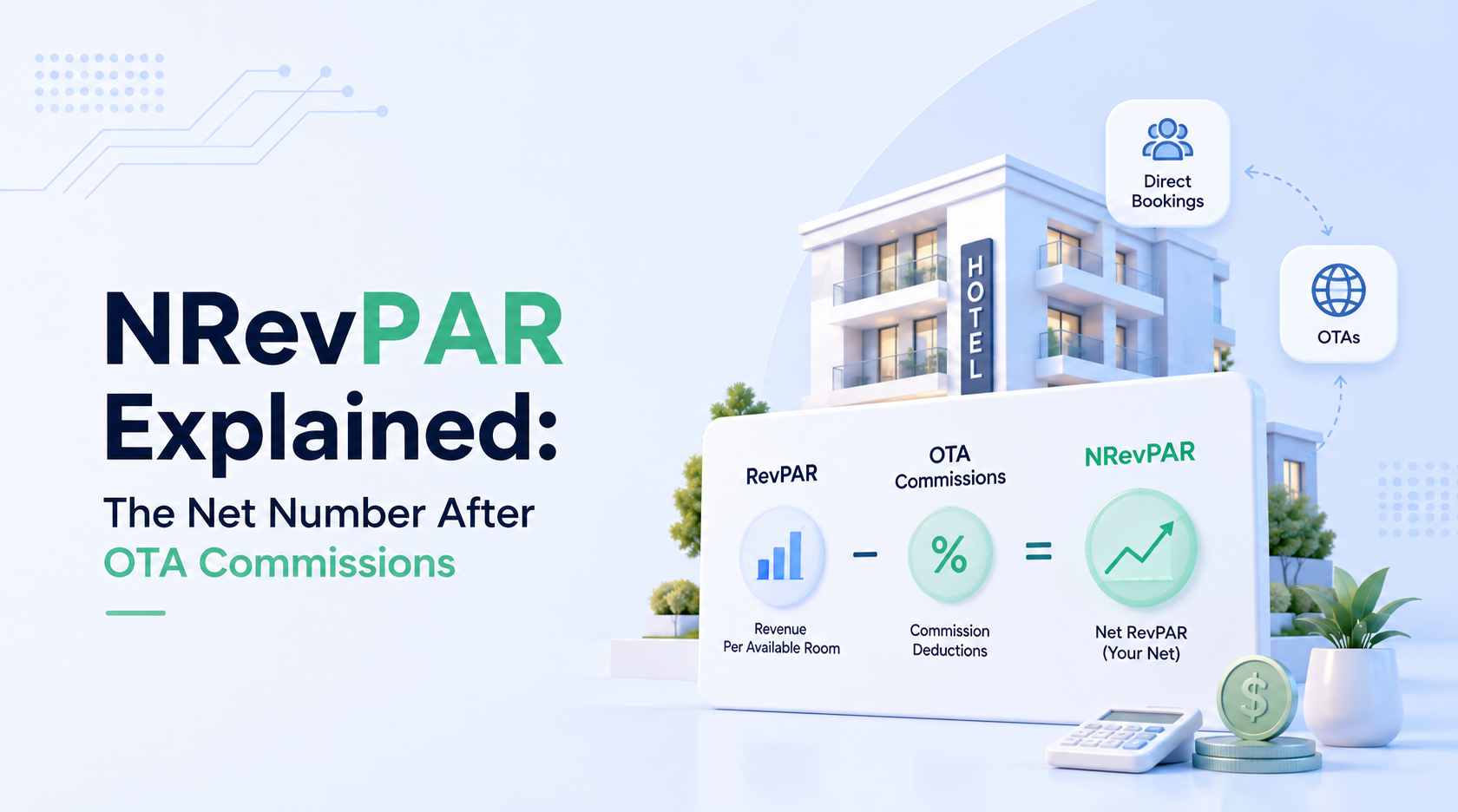
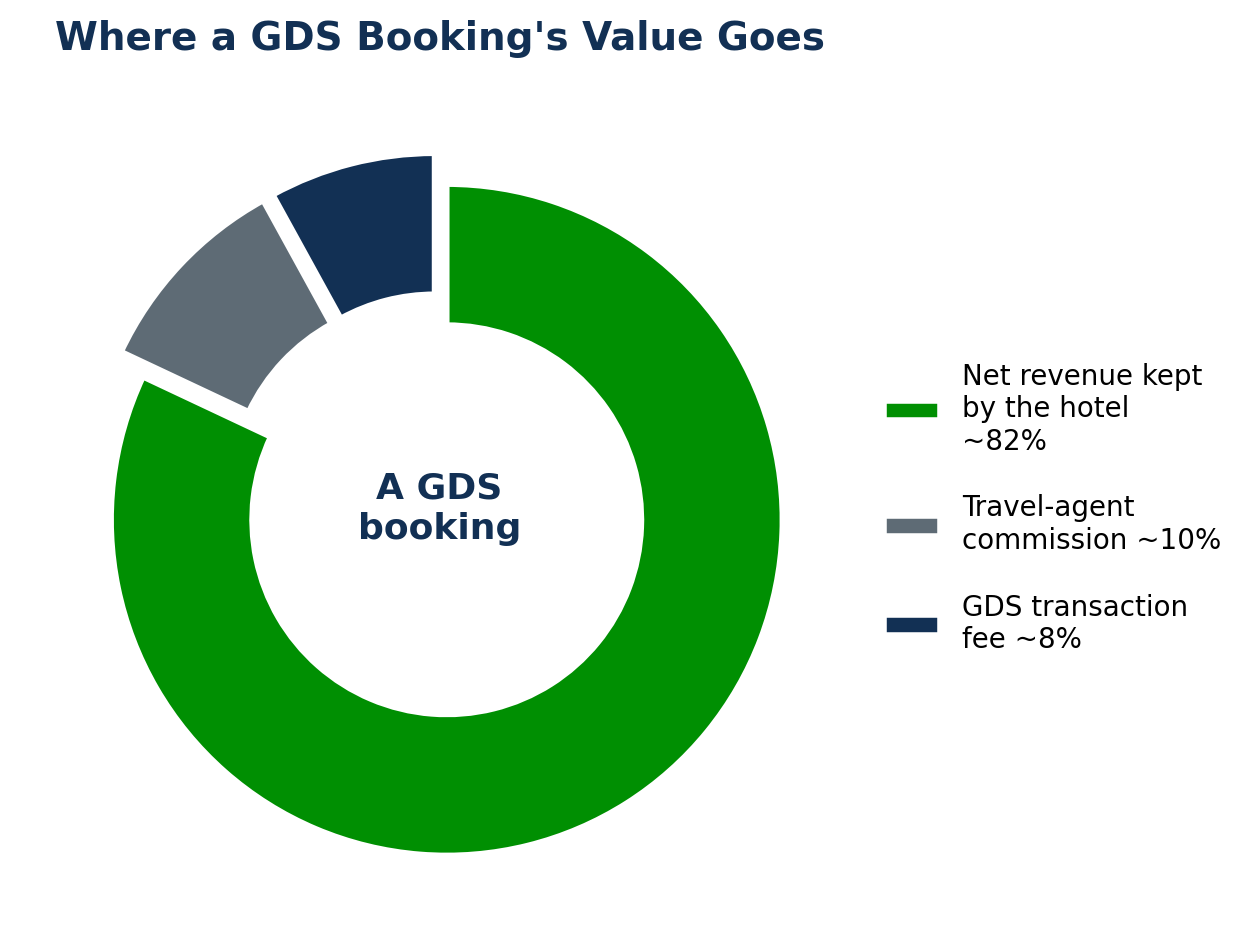
A GDS booking carries two costs: a per-booking transaction fee paid to the GDS, and a commission paid to the travel agent who made the booking. Stacked together they’re real, but for the right business they’re often lower than OTA commission — which is why the honest way to judge GDS is by net RevPAR, the revenue you keep after distribution cost, not by the gross bookings it brings.
Who GDS still works for in 2026
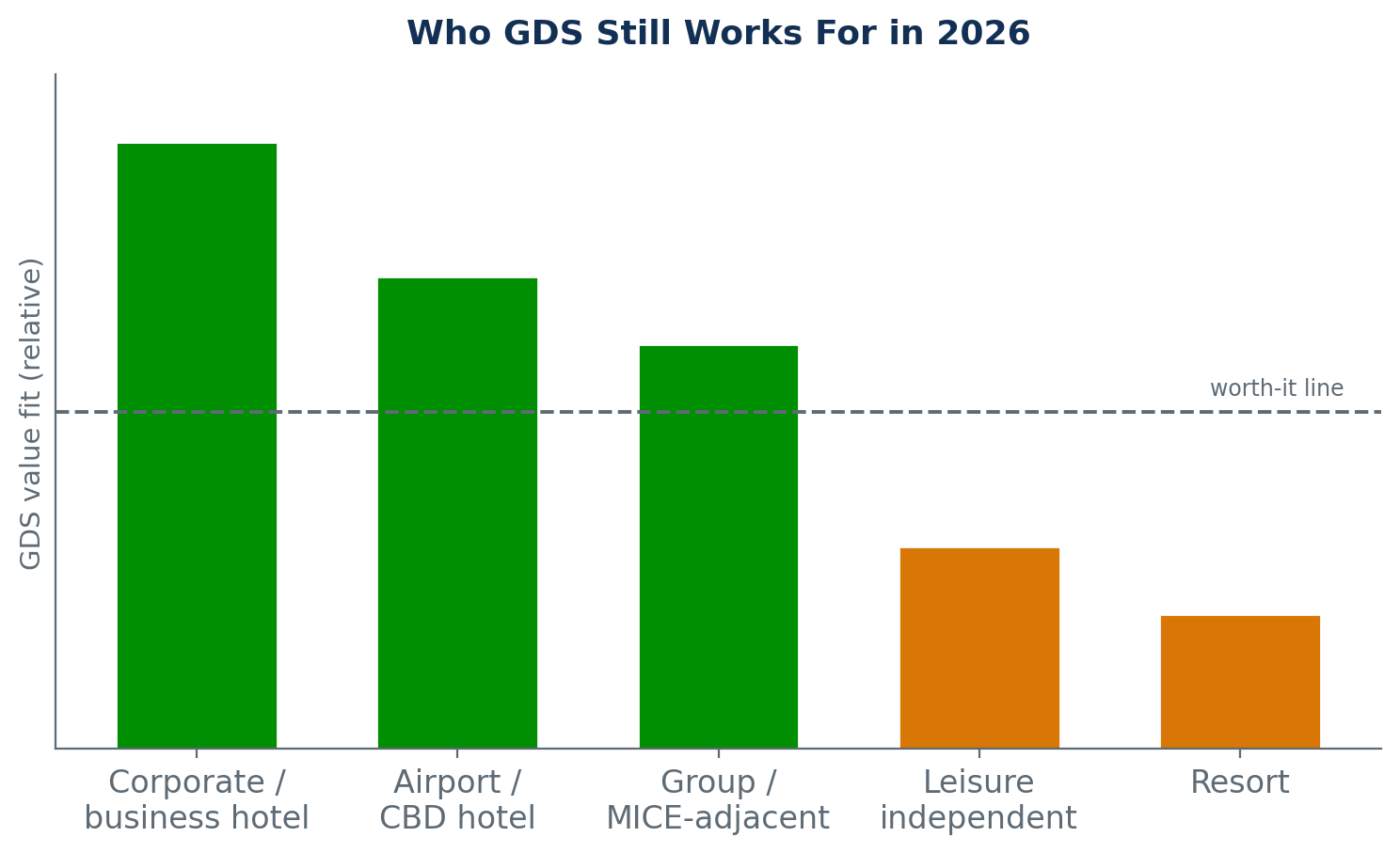
GDS earns its place at hotels with meaningful corporate and travel-agent demand. If a good share of your business comes from company travel — booked through travel management companies and corporate negotiated rates — the GDS is how that business reaches you. Cut it, and you cut the channel your best corporate accounts use to book.
- Corporate / business hotels — the core GDS audience; company travelers book via TMCs on Sabre and Amadeus.
- Airport and CBD hotels — heavy business-travel demand, much of it agent-booked.
- Group and MICE-adjacent hotels — meeting and event travel often routes through agents.
- Hotels with negotiated corporate accounts — those rates are distributed and booked through the GDS.
Who probably doesn’t need GDS anymore
For a lot of hotels, the GDS is a legacy line item that no longer pays for itself. If almost none of your demand is corporate or agent-booked, you’re paying fees to appear in a channel your guests never use.
- Leisure independents — guests book direct, on OTAs, or via metasearch, not through travel agents.
- Resorts — vacation demand is overwhelmingly consumer-booked, not GDS.
- Hotels with a tiny corporate mix — if GDS is a rounding error in your channel report, the fees may exceed the value.
GDS vs OTAs vs metasearch vs direct
The GDS is one of four ways demand reaches your hotel, and each serves a different traveler. Understanding where GDS fits keeps the channel-mix decision clear — and pairs with Google Hotel Ads for the modern-reach side of the picture.
| Channel | Reaches | Books via | Best for |
|---|---|---|---|
| GDS | Travel agents / corporate bookers | Sabre, Amadeus, Travelport | Corporate & agent-booked demand |
| OTAs | Leisure consumers | Booking.com, Expedia, etc. | Broad consumer reach (at commission) |
| Metasearch | Price-comparing consumers | Google, Trivago | Direct-booking capture |
| Direct | Your own guests | Your website / booking engine | Lowest cost of sale |
The 2026 question: NDC and the future of GDS
The reason people keep asking whether GDS is dying is that distribution is genuinely changing. NDC (New Distribution Capability), a newer standard led by the airline world, lets suppliers distribute richer content and offers outside the legacy GDS pipes — and it’s slowly reshaping how agent and corporate bookings flow. At the same time, corporate travel has proven resilient, and the travel-agent and TMC ecosystem that relies on the GDS hasn’t gone anywhere.
The practical read for a hotel: GDS isn’t collapsing in 2026, but it also isn’t automatically worth keeping. Watch NDC, but decide on today’s numbers — your corporate mix and your GDS net contribution — not on a prediction about the channel’s eventual fate.
How to decide if GDS is worth it for your hotel
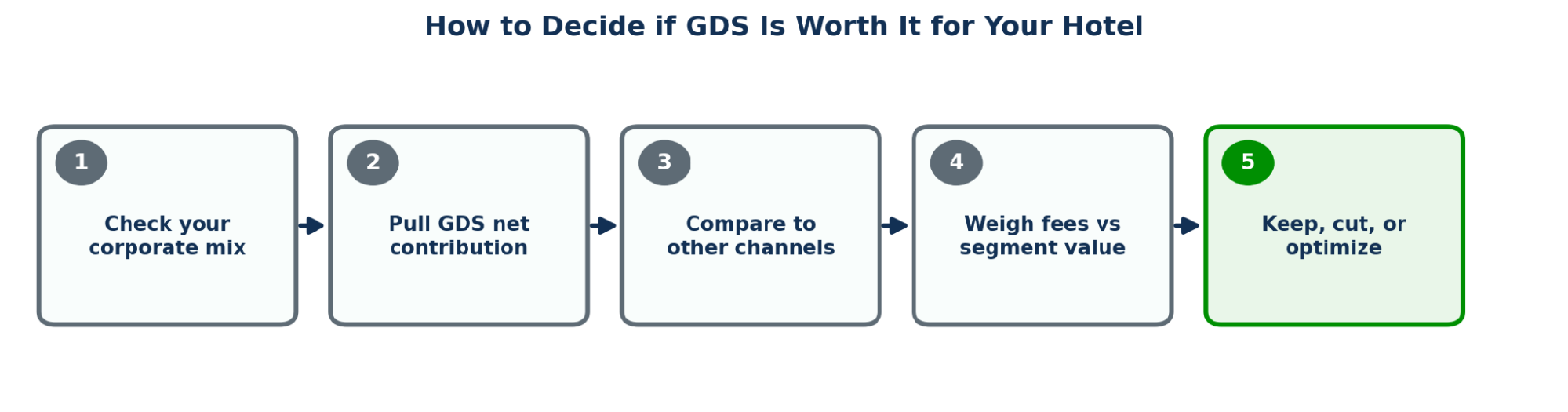
Don’t decide on gut or on a trend piece. Decide on your own numbers, in five steps.
- Check your corporate mix — how much of your demand is business/agent-booked?
- Pull your GDS net contribution — revenue from GDS minus the fees and commissions it costs.
- Compare it to your other channels on a net basis — what does GDS keep versus OTAs and direct?
- Weigh the fixed and per-booking fees against the segment value GDS uniquely reaches.
- Decide: keep it, cut it, or optimize it (tighten which rates and segments you expose).
How RevEvolve helps (and where it doesn’t)
RM Copilot is an operator-facing AI revenue copilot. It analyzes your channels on a net basis — including what GDS and corporate business actually contribute after cost — and recommends the pricing and mix moves that make each channel pay. It surfaces whether your GDS-fed corporate demand is net-positive and helps you price it right. Then your team decides and applies.
GDS for hotels: three objections
Decide on the numbers, not the trend
The GDS question gets asked every year and answered with a vibe. It deserves better, because the right answer genuinely differs by hotel: a workhorse for corporate and airport properties, a legacy fee for leisure independents.
Check your corporate mix, pull the net contribution, compare it against your other channels on the same basis, and then keep, cut, or optimize. A channel is worth what it nets you — not what it used to be worth, and not what a trend piece says it will be.
Keep going: Hotel distribution channels · NRevPAR explained · Google Hotel Ads · Hotel RFP season.