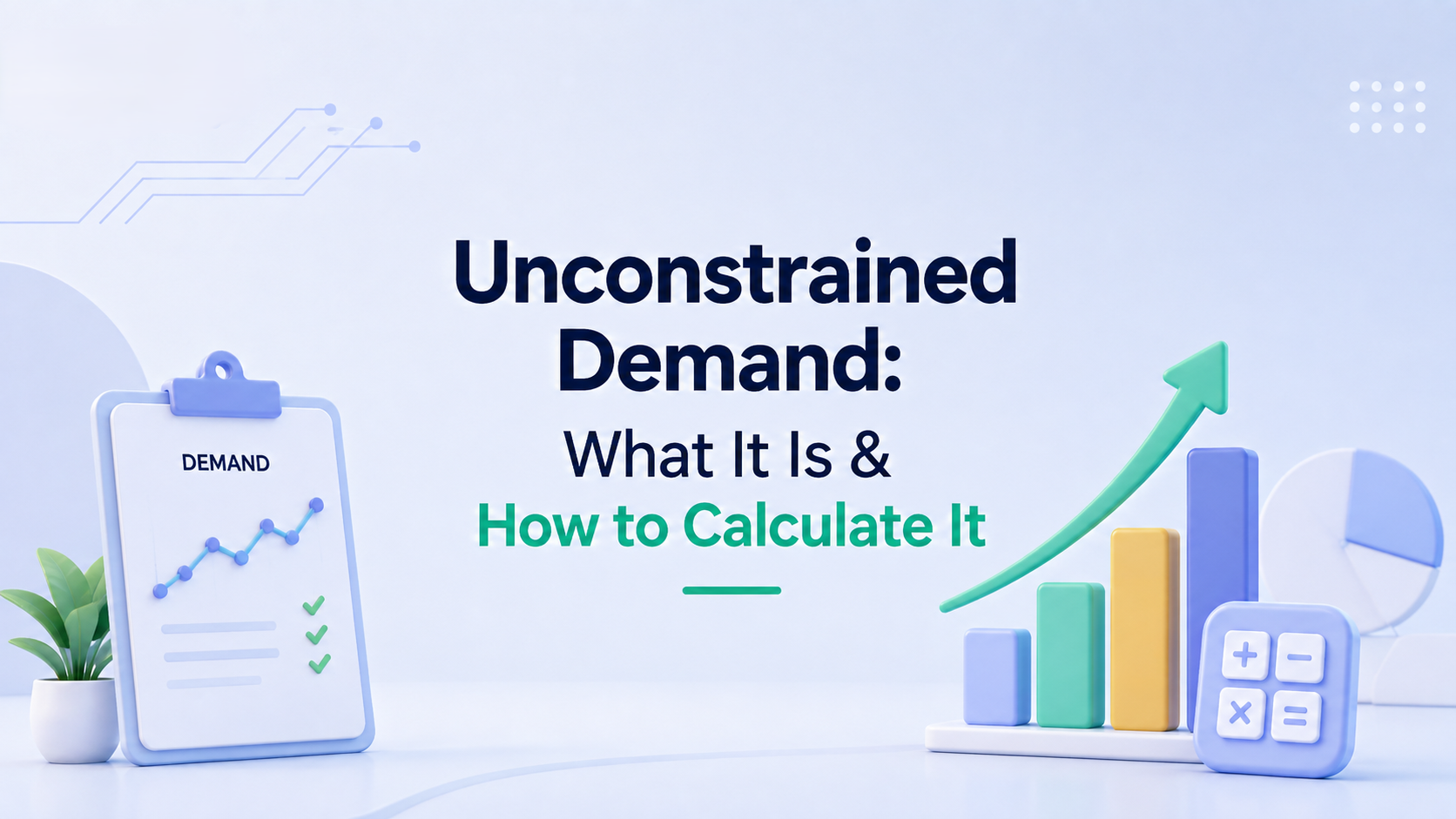
SNIPPET DEFINITION — Unconstrained demand is the total demand that existed for your hotel on a date — including the demand you couldn’t capture because you were sold out or had restrictions in place. Your actual bookings are constrained demand; unconstrained (or true) demand adds the denied demand back on top. It matters because forecasting off captured bookings alone systematically under-forecasts — and under-prices — your busiest dates.
You sold out on a big weekend at $180 a night. Every room gone — a success, on paper. But how many guests wanted a room and couldn’t get one? How many would have paid $240? A sell-out feels like a win, and sometimes it’s actually a signal that you left rate on the table and never saw it.
That invisible demand — the guests you turned away, the searches that ended in “no availability” — has a name: unconstrained demand. Learning to see it is what separates a hotel that reacts to bookings from one that prices to what the market actually wanted.
We sold out at $180 and called it a win. Turns out we could’ve sold every room at $240 — the extra demand was there, we just never counted it.
Quick scope note: unconstrained demand is about true demand — how much was really there, including what you turned away. It’s related to but different from booking pace, which is about how bookings accumulate over time. Pace tells you the rhythm; unconstrained demand tells you the true ceiling.
Key takeaways
- Unconstrained demand = true demand, including what you turned away.
- Your bookings are constrained demand — capped by capacity and restrictions.
- Denied demand is the gap between the two on sold-out or restricted dates.
- Forecasting off captured bookings under-prices your peaks, year after year.
- Unconstraining adds denied demand back so you price to what was really there.
What is unconstrained demand?
The word that matters is “unlimited.” Your real bookings are always limited by how many rooms you have and what rates were open. Unconstrained demand strips those limits away to show what the market actually wanted.
Constrained vs unconstrained demand
Constrained demand is what happened; unconstrained demand is what wanted to happen. On a quiet date they’re the same — everyone who wanted a room got one. On a sold-out date they diverge, and the gap is the demand you never saw on a report.
| Constrained demand | Unconstrained (true) demand | |
|---|---|---|
| What it is | Bookings you captured | All demand that existed |
| Limited by capacity? | Yes — capped at your rooms | No — the true figure |
| On a quiet date | Equals true demand | Equals captured demand |
| On a sold-out date | Understates the truth | Adds back denied demand |
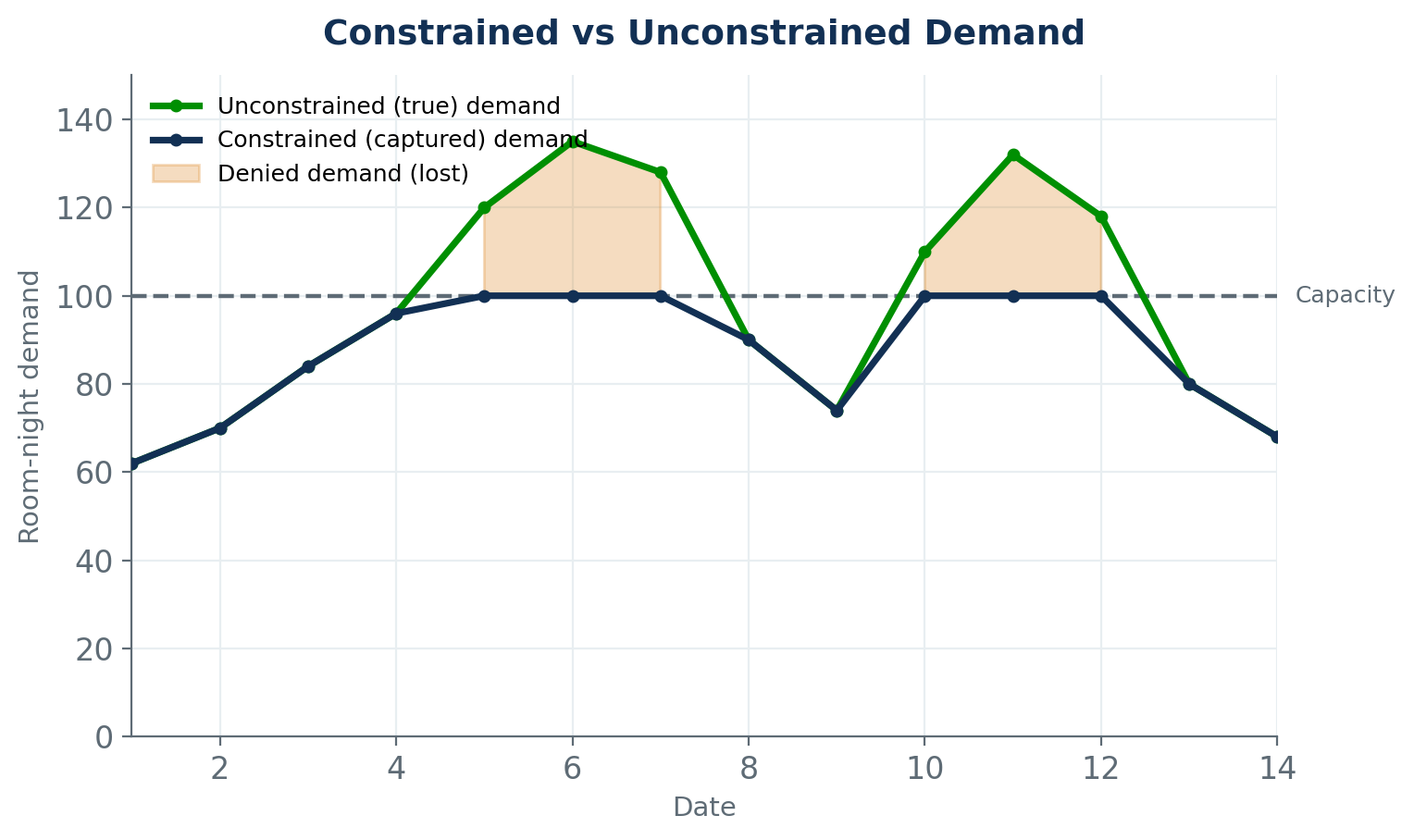
Denied demand and demand unconstraining
Unconstraining sounds academic, but the question it answers is simple: “how much would we have sold if we’d had the rooms and left rates open?” Answer that, and your forecast stops flinching at the capacity ceiling.
Why unconstrained demand matters
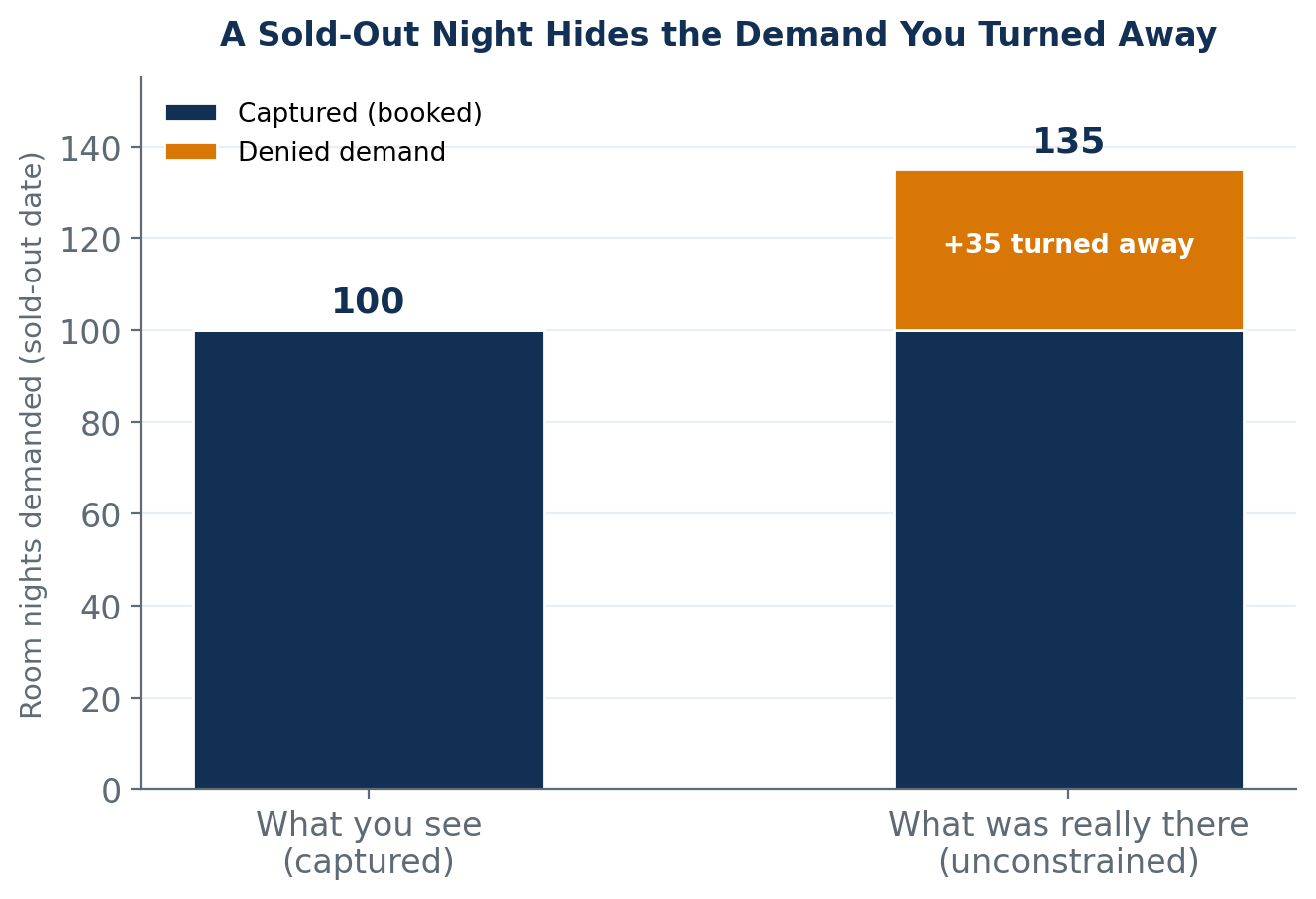
Here’s the trap. If you build a forecast from captured bookings, every sold-out date looks like exactly ‘capacity’ worth of demand — never more. So next year you forecast the same ceiling, price to it, and sell out again at a rate that was too low. Forecasting off constrained demand quietly under-prices your best dates on repeat. Feeding forecasting the unconstrained figure breaks that cycle.
The upside is concrete: on dates where true demand exceeds capacity, the right move is a higher rate, tighter restrictions, or both. You can’t make that call if your data says demand was only ever equal to your room count.
How to calculate unconstrained demand
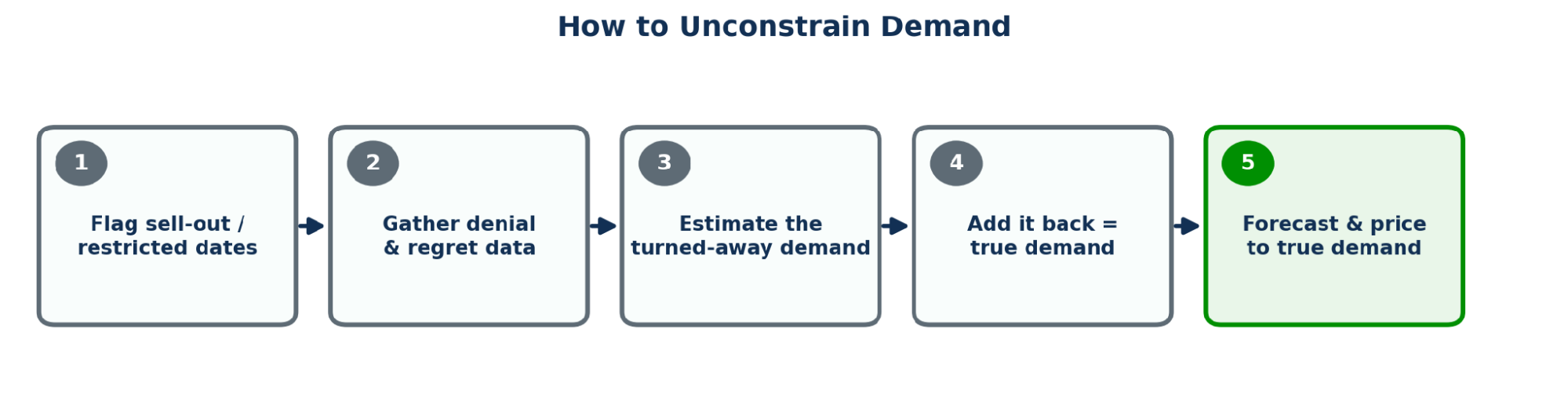
You don’t need a PhD in operations research to unconstrain demand — you need a consistent method and the denial data most hotels already generate.
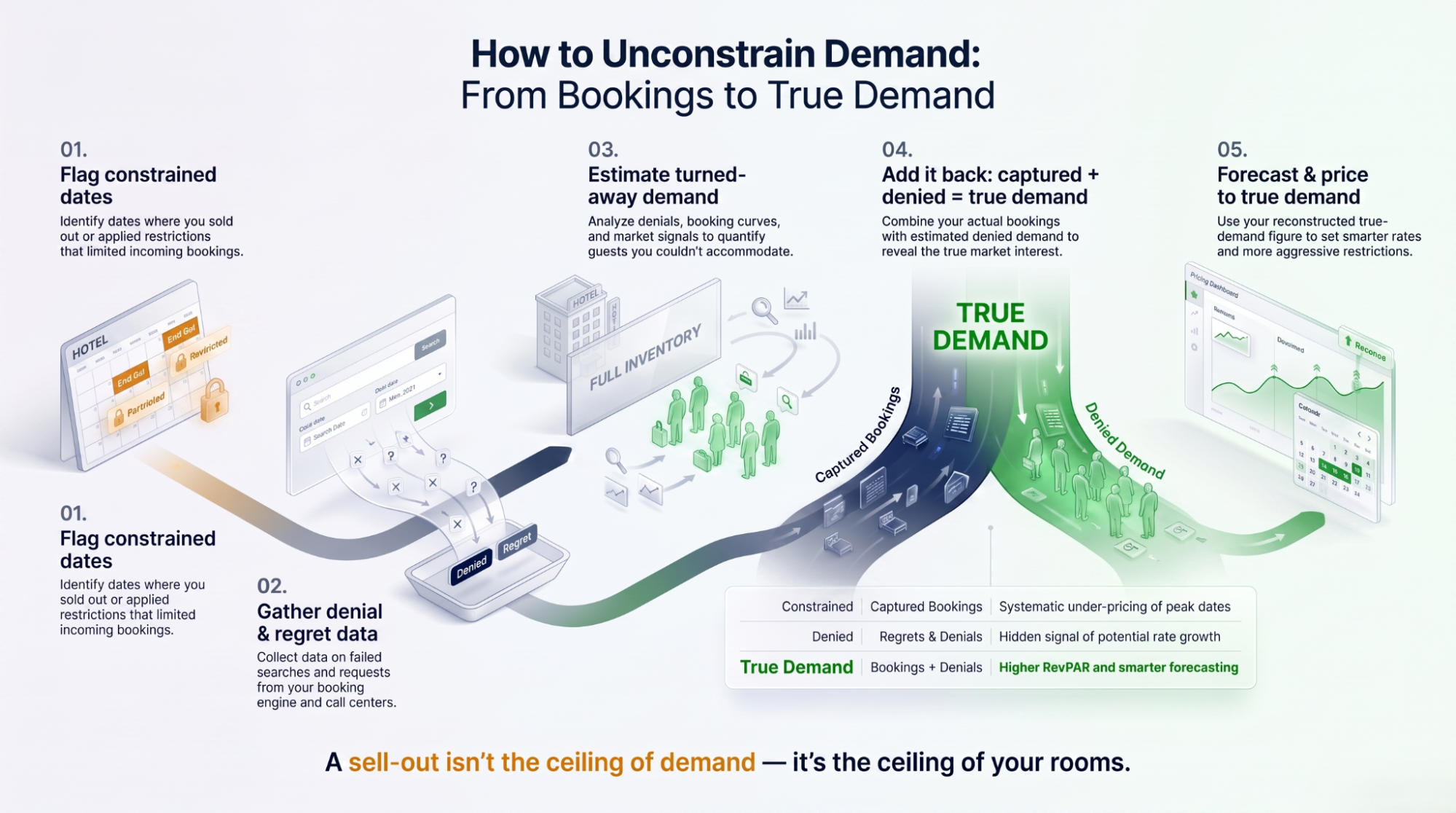
- Flag the dates where you sold out or ran restrictions — those are the only dates that were constrained.
- Gather denial and regret data — the searches and requests that ended in “no availability” or a closed rate.
- Estimate the turned-away demand for those dates from denials, booking curves, and market signals.
- Add it back to your captured bookings — captured plus estimated denied equals true demand.
- Forecast and price to true demand, not to the capacity ceiling.
Where the denied-demand signal comes from
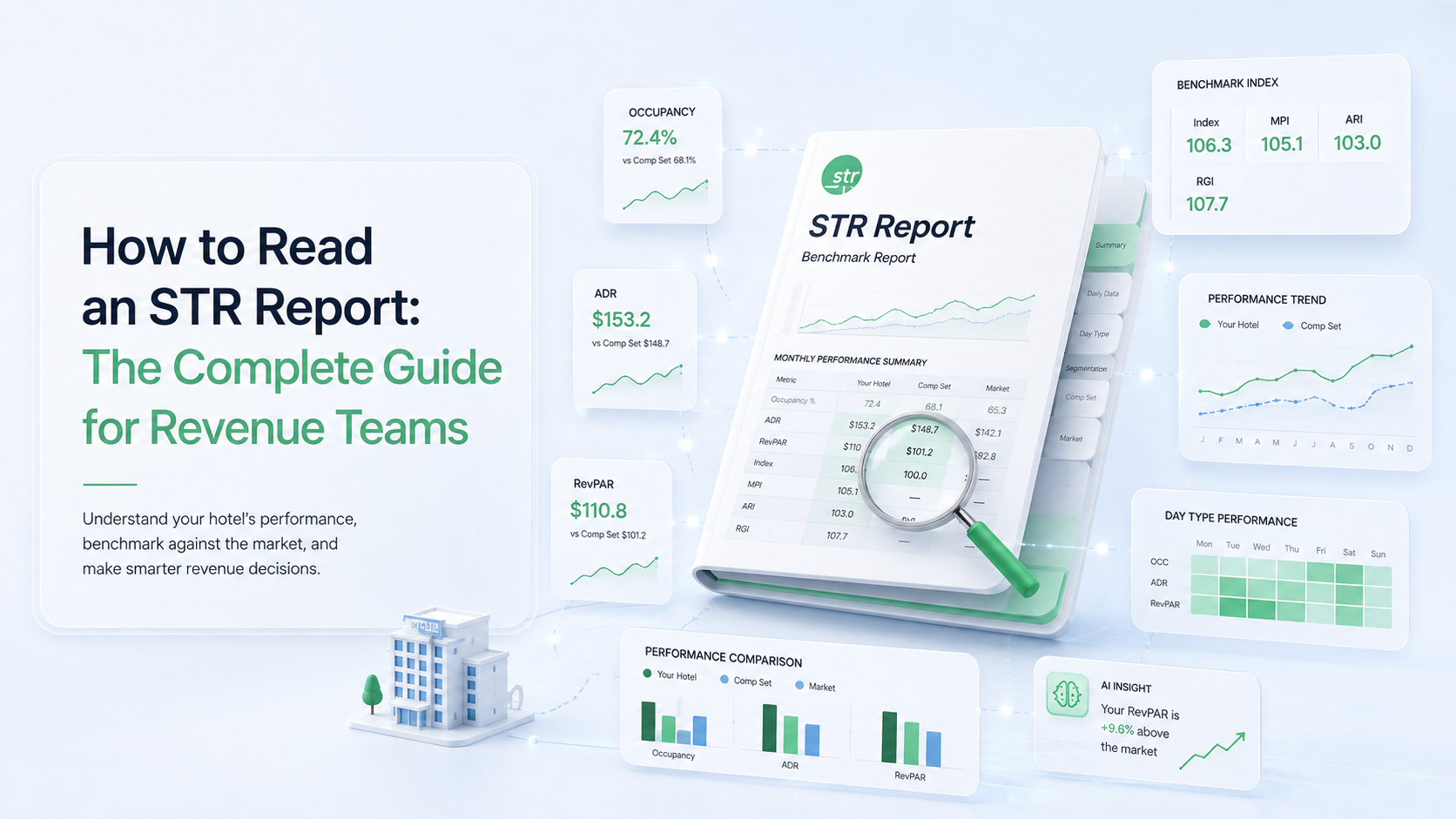
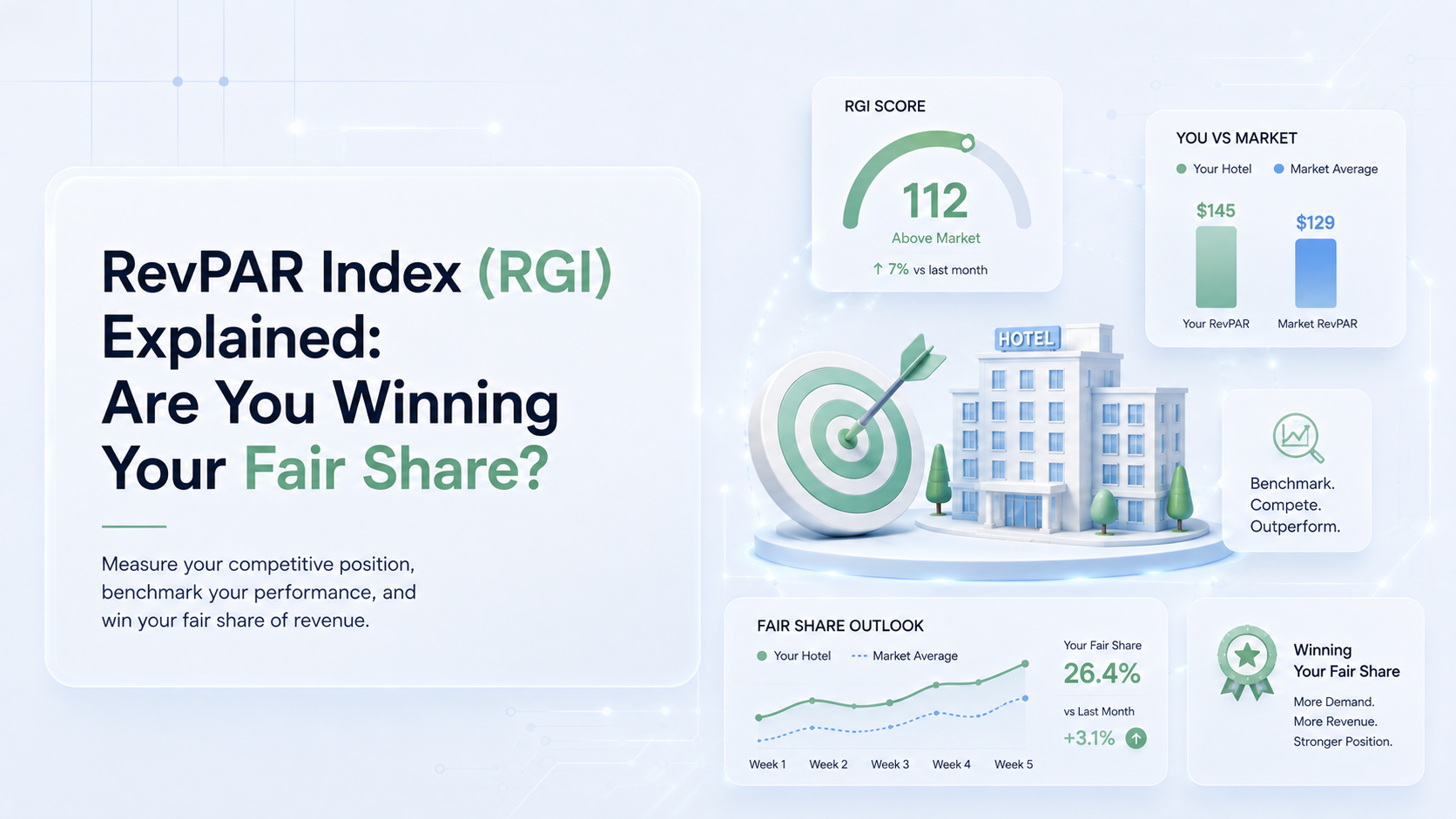
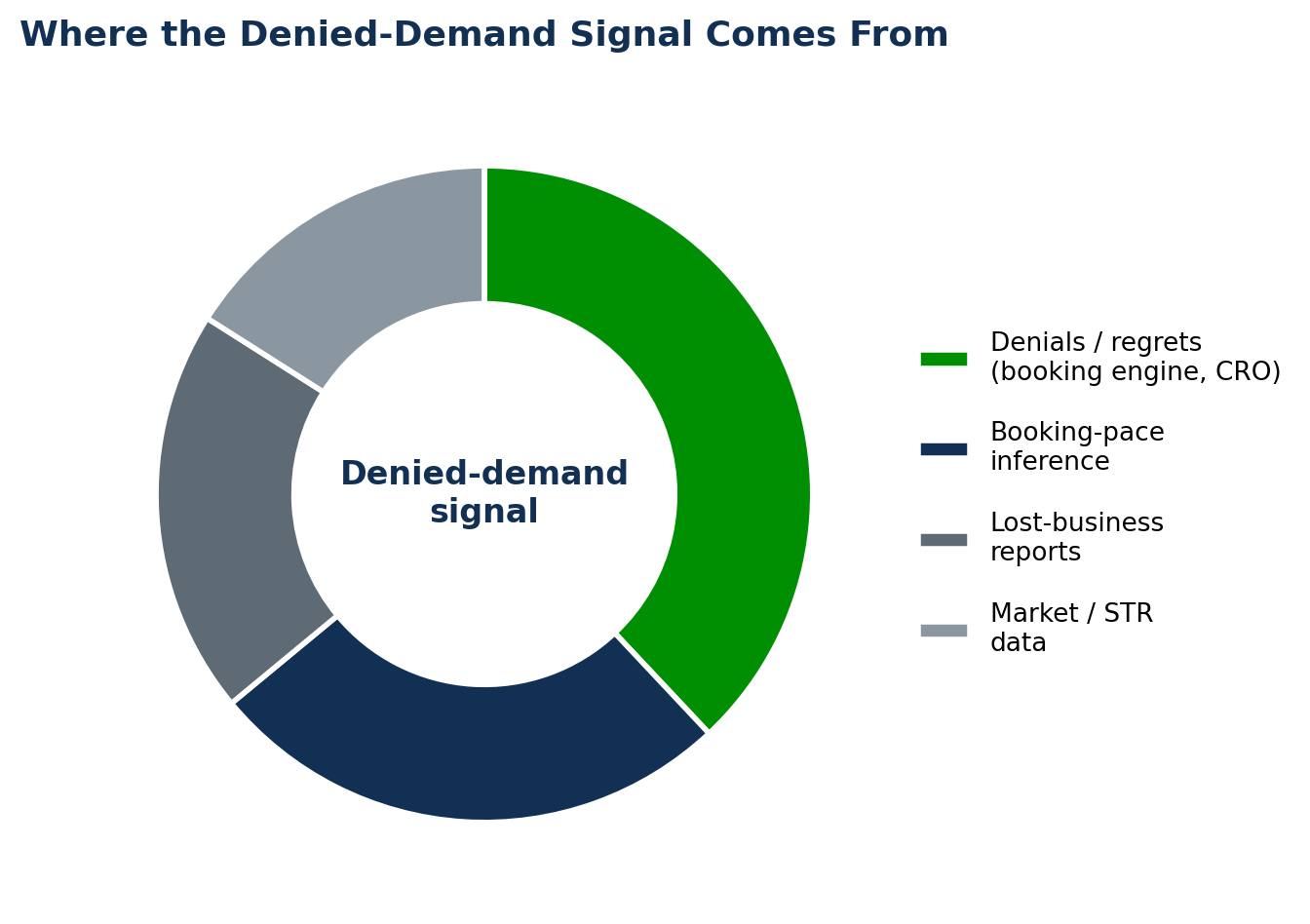
You can’t measure denied demand directly — the guest who couldn’t book didn’t leave a reservation. But the signal is there in four places. Denials and regrets from your booking engine and call center show searches that failed. Booking pace reveals dates that filled unusually early, a fingerprint of demand pressing against capacity. Lost-business reports capture group and corporate requests you couldn’t accommodate. And market data — your STR report and RevPAR Index — shows whether the whole market was compressed on those dates.
How true demand improves pricing and forecasting
Once you can see true demand, three decisions get sharper. Pricing: on dates where unconstrained demand tops capacity, you raise rate with confidence instead of selling out cheap. Restrictions: you apply minimum stays or close discounts on genuinely high-demand dates, not on hunches. Forecasting: your baseline reflects what the market wanted, so next year’s plan doesn’t inherit last year’s under-pricing.
How RevEvolve helps you see true demand
RM Copilot is an operator-facing AI revenue copilot. It analyzes your demand patterns — including the denial, regret, and pace signals that point to turned-away demand — to help you see true demand on constrained dates. It simulates the impact of a rate or restriction change against that true demand and recommends the move with the reasoning attached. Then your team reviews and applies it. It doesn’t auto-forecast on its own, auto-price, or push changes to your systems.
Unconstrained demand: three objections
Price to what the market wanted
A sell-out is the ceiling of your rooms, not the ceiling of demand. When you forecast and price off captured bookings alone, you treat those two ceilings as the same — and quietly under-price your best dates every year. Unconstrained demand pulls them apart and shows you the rate signal hiding in a full house.
Flag your constrained dates, find the denied demand in the data you already produce, add it back, and price to the true figure. Do that, and ‘sold out’ stops being the end of the story and becomes the start of a better rate next time.
Keep going: How to read an STR report · RevPAR Index (RGI) · Cancellation & no-show forecasting · AI demand forecasting.