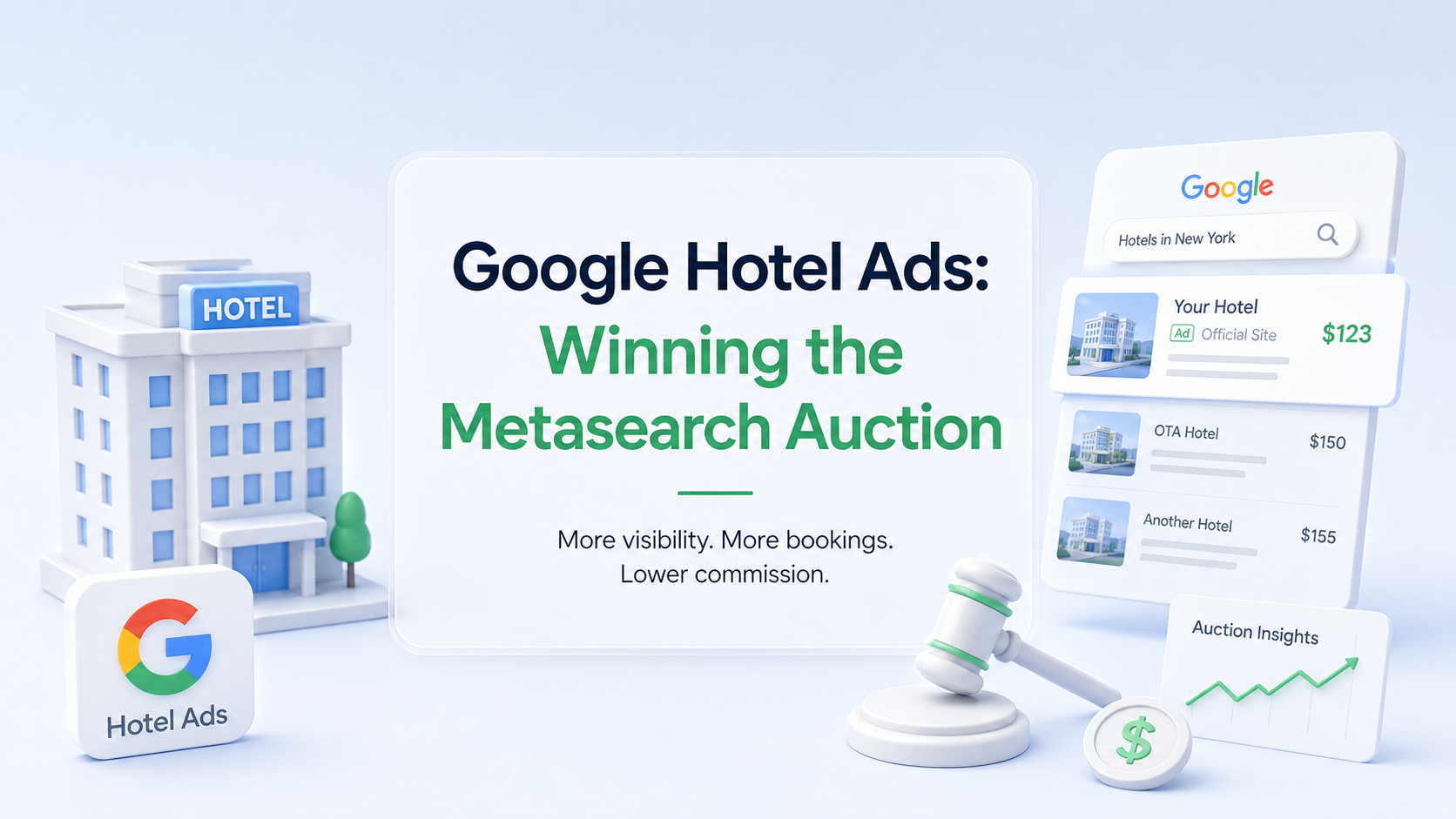
A traveler searches your hotel by name. Up comes a tidy price-comparison box — your rate next to three OTAs’. If the OTA rate is lower, or theirs is bolder because they outbid you, the guest clicks the OTA. You just paid an ad platform to hand a booking to a middleman who’ll take a commission on your own guest.
That box is metasearch, and Google Hotel Ads is the biggest version of it. Winning it isn’t mainly about bidding more — it’s about showing a competitive, consistent rate and making the click easy to book. Get that right and metasearch becomes one of the cheapest direct-booking channels you have.
OTAs outbid us on metasearch for our own hotel name, and we hand them the commission anyway. We turned on Hotel Ads, spent a fortune, and couldn’t tell if it beat just paying the OTA.
Quick scope note: metasearch is one channel in your wider distribution channels mix, and it’s a key front in the direct vs OTAs battle. This post is the metasearch deep-dive — how Google Hotel Ads works and how to win it.
SNIPPET DEFINITION — Google Hotel Ads is Google’s hotel metasearch product: it shows a traveler live prices for a hotel from OTAs and the hotel’s own site, side by side, in search and Maps. Hotels compete for placement through a mix of bid, rate competitiveness, and conversion. Free booking links let a hotel appear organically at no cost per click. Winning starts with a competitive, parity-clean rate — not just a bigger bid.
Key takeaways
- Google Hotel Ads is metasearch — live price comparison, not a display ad.
- Rate competitiveness drives placement more than bid size.
- Free booking links let you appear organically, at no cost per click.
- A parity problem can’t be out-bid — fix parity first.
- The click only pays off if the landing page converts.
What is Google Hotel Ads?
It isn’t a banner ad and it isn’t an OTA. It’s a price-comparison layer that sits above both — which is exactly why the rate you show there matters so much.
How the metasearch auction works
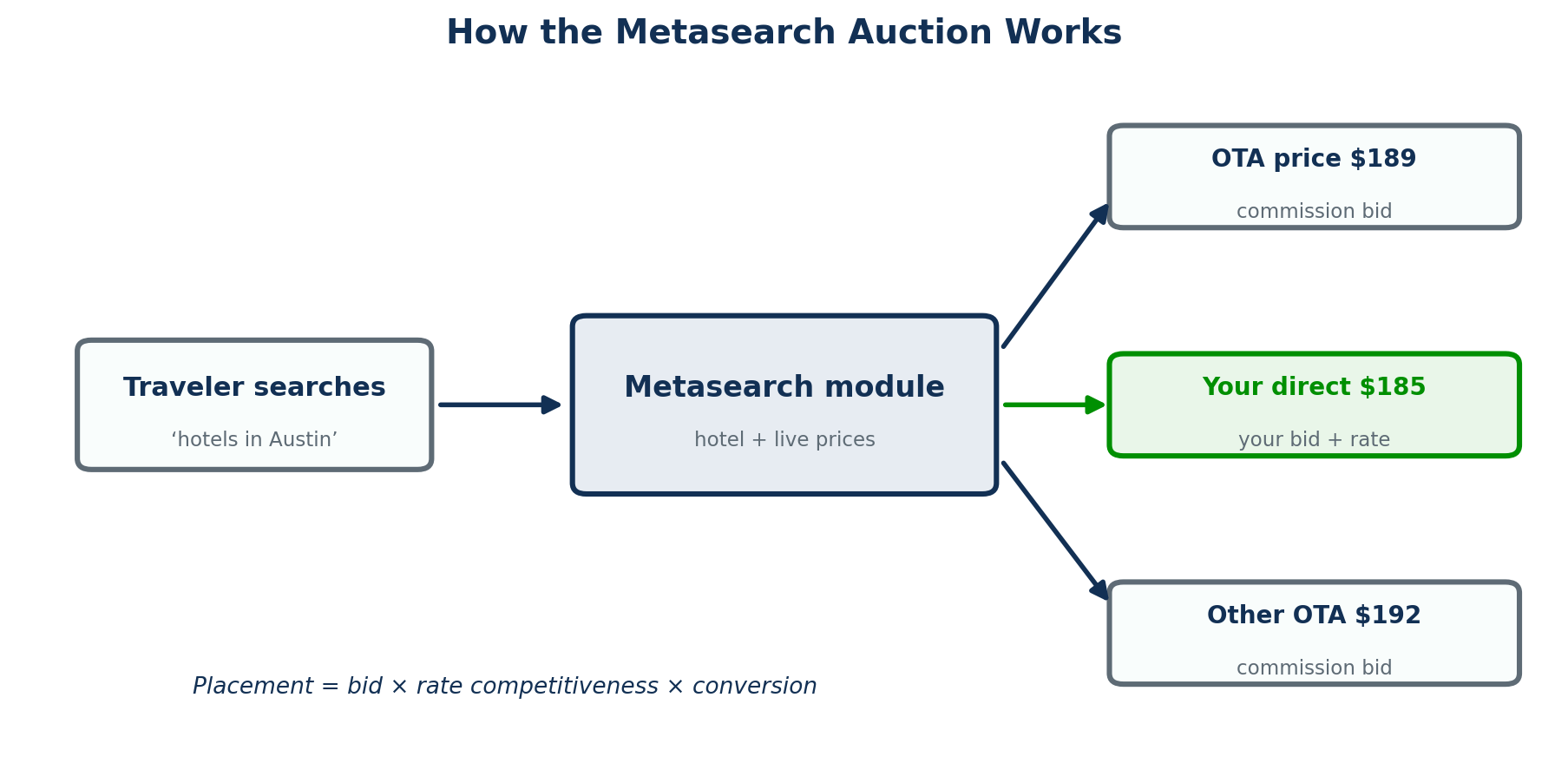
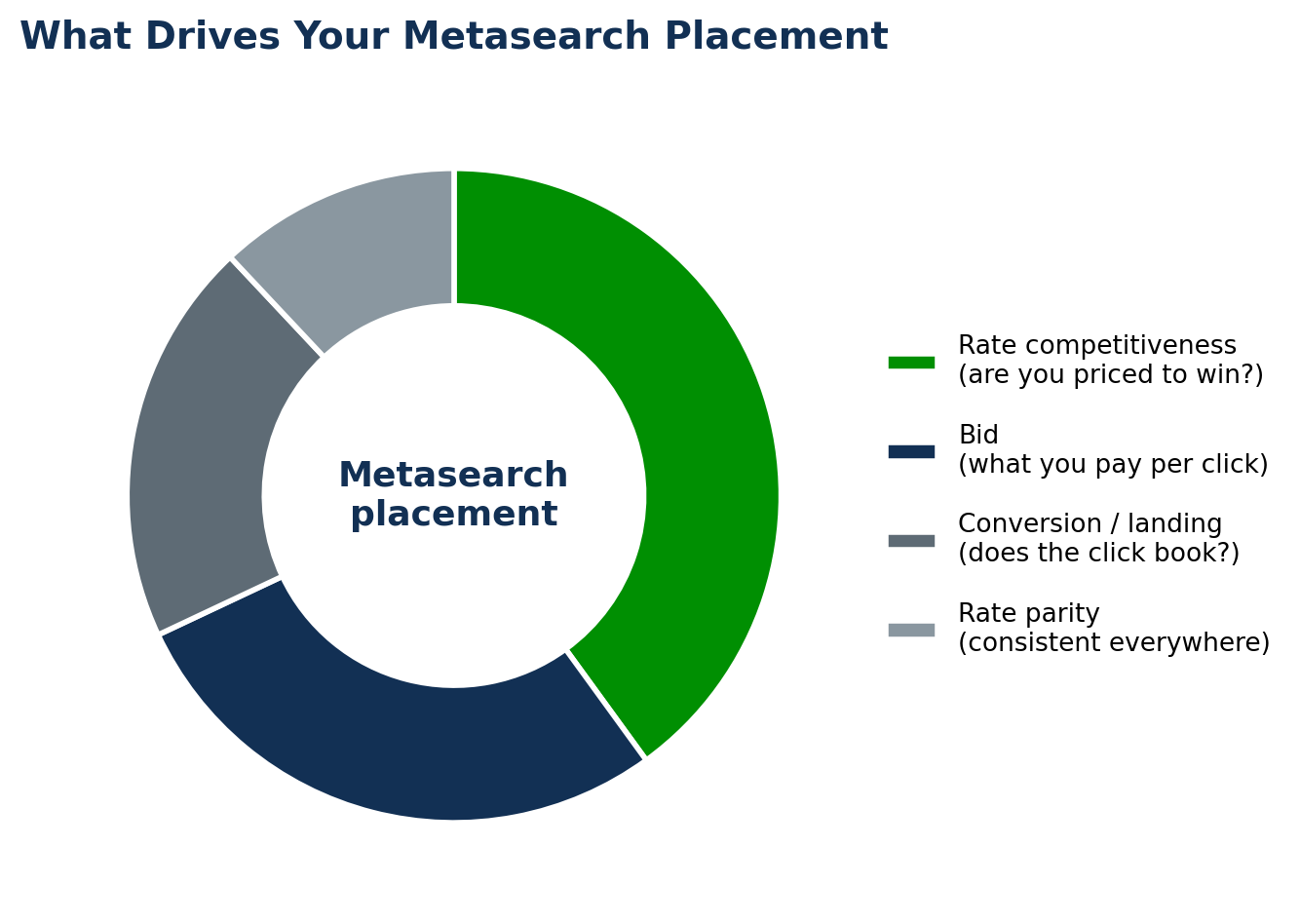
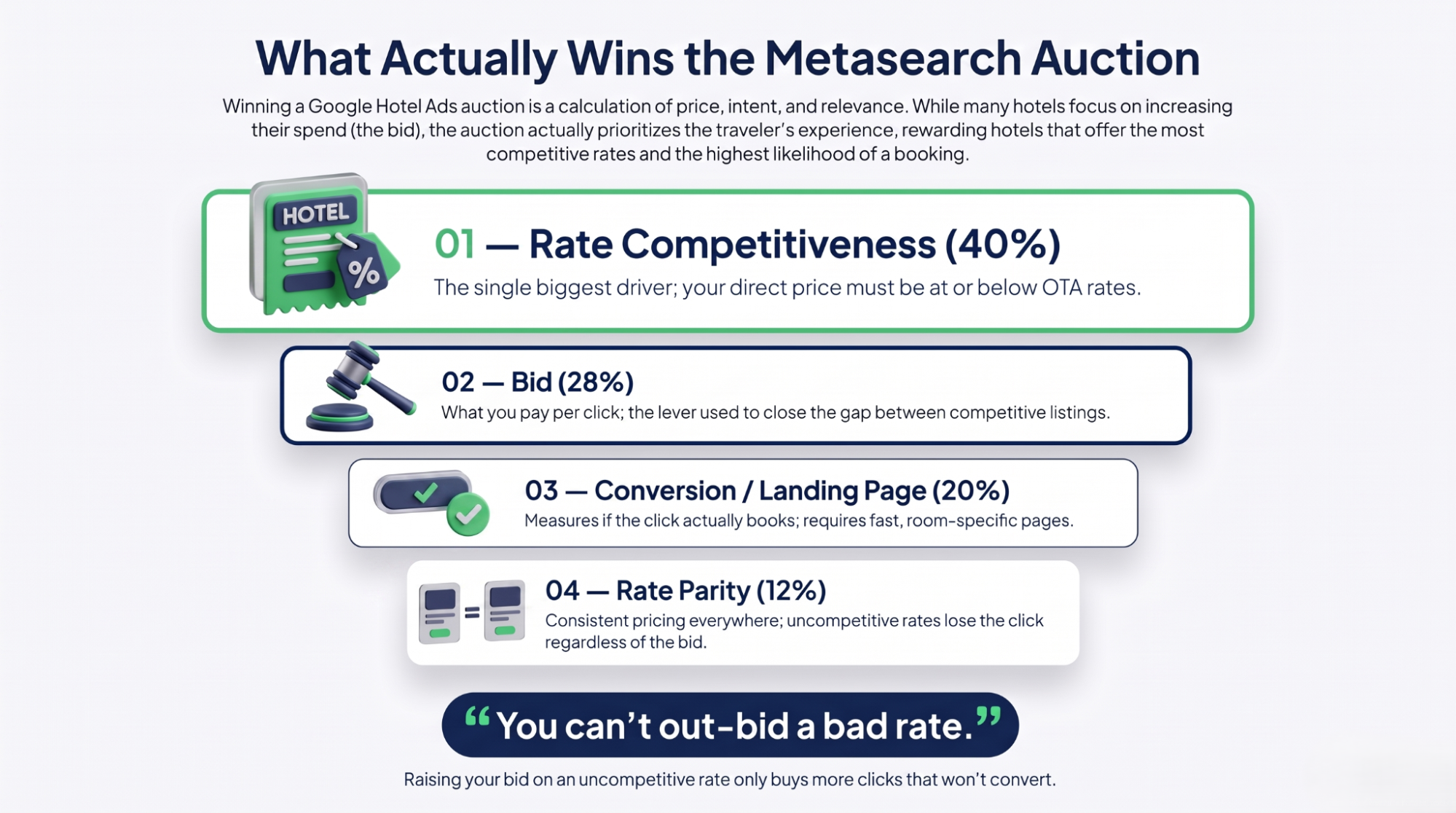
When the module loads, several providers can show a price for the same hotel: two or three OTAs and, if you’ve set it up, your direct rate. Which listing lands on top and gets the click comes down to a combination of what you bid, how competitive your rate is, and how likely the click is to convert.
| Factor | What it means | Who controls it |
|---|---|---|
| Bid | What you’ll pay for the click or booking | You |
| Rate competitiveness | Is your price at or below the others? | You (via pricing) |
| Conversion likelihood | Will the click actually book? | You (landing page) |
| Parity | Is your rate consistent across channels? | You (distribution) |
Free booking links: the free way to appear
Free booking links don’t replace paid Hotel Ads; they complement them. Turn them on first — there’s little downside to a free direct listing — then layer paid bidding on top where the economics justify it.
Google Hotel Ads bid models, explained
Hotels can bid in a few ways. The right one depends on how much control and predictability you want. (Confirm current model names in Google’s documentation — these evolve.)
| Bid model | How you pay | Best when |
|---|---|---|
| Cost per click (CPC) | Per click to your booking page | You want granular control of spend |
| Commission (per stay) | A % only when the stay completes | You want to pay for results, low risk |
| Commission (per conversion) | A % when the booking is made | You want results-based with earlier attribution |
| Target ROAS / automated | Google optimizes bids to a return goal | You have conversion tracking and volume |
Commission models shift the risk to when a booking (or stay) actually happens, which many independents prefer. CPC and target-ROAS reward tight conversion tracking. Whichever you choose, the bid is the lever you pull last — after the rate and the landing page are right.
What actually wins the metasearch auction
Here’s the part most guides skip: you can’t out-bid a bad rate. If your direct price shows higher than the OTA’s for the same room, the traveler clicks the cheaper option no matter what you paid to appear. Rate competitiveness — staying at or below the rate others show, which means keeping rate parity clean — is the single biggest driver of whether metasearch works. Keep an eye on how your rate reads against the market through ongoing rate shopping.
After rate comes conversion. A click that lands on a slow, generic homepage is wasted spend. Send metasearch clicks to a fast, room-specific booking page that matches the price and dates the traveler just saw. Then, and only then, does the bid decide the margins between competitive listings.
How to win without overspending
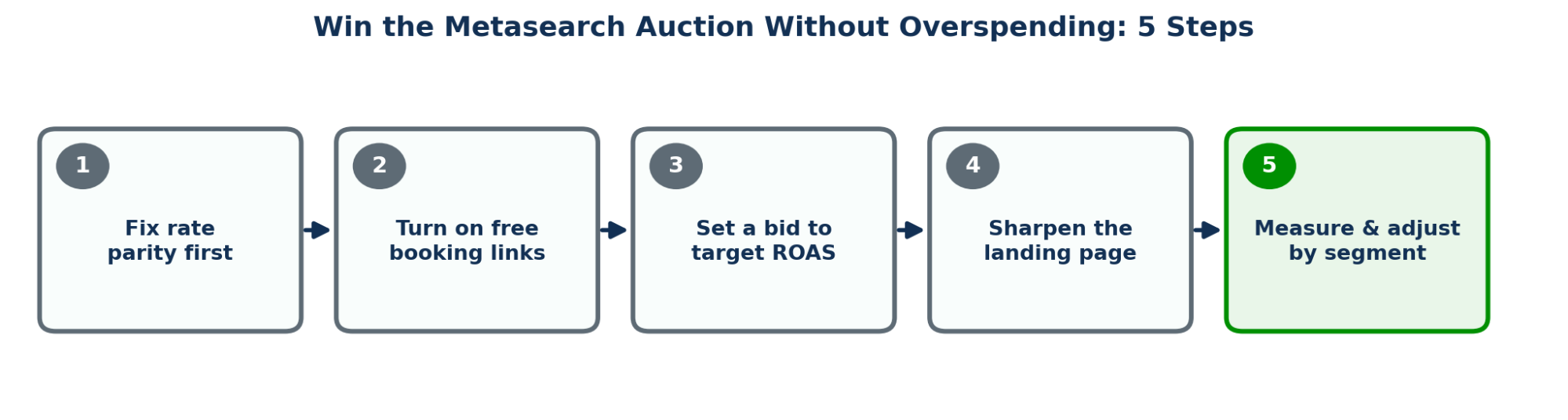
Winning metasearch profitably is a five-step order of operations. Do them in sequence — skipping to bidding is the most common (and expensive) mistake.
- Fix rate parity first — an uncompetitive or inconsistent rate loses before you bid.
- Turn on free booking links — capture organic direct demand at no cost per click.
- Set a bid to a target return (ROAS or a commission model you can live with).
- Sharpen the landing page — fast, room-specific, matching the quoted rate and dates.
- Measure and adjust by segment — device, market, length of stay — and cut what doesn’t return.
Where Google Hotel Ads goes wrong
1 · Bidding on top of a parity problem
If your rate shows higher than an OTA’s, a bigger bid just buys more clicks that don’t convert. Fix the rate before you raise the bid.
2 · Ignoring free booking links
Paying for clicks you could get organically is the most common waste. Free links should be on before a dollar of paid spend.
3 · Dumping clicks on a poor landing page
A metasearch click is high-intent — the traveler is comparing prices right now. A slow or generic page throws that intent away.
4 · Judging it against the wrong benchmark
The right comparison isn’t “did metasearch make money in a vacuum” — it’s “did a metasearch-driven direct booking cost less than the same booking via an OTA?” Measured that way, and set against your direct vs OTAs economics, metasearch usually looks very different.
Metasearch vs OTA: the direct-booking economics
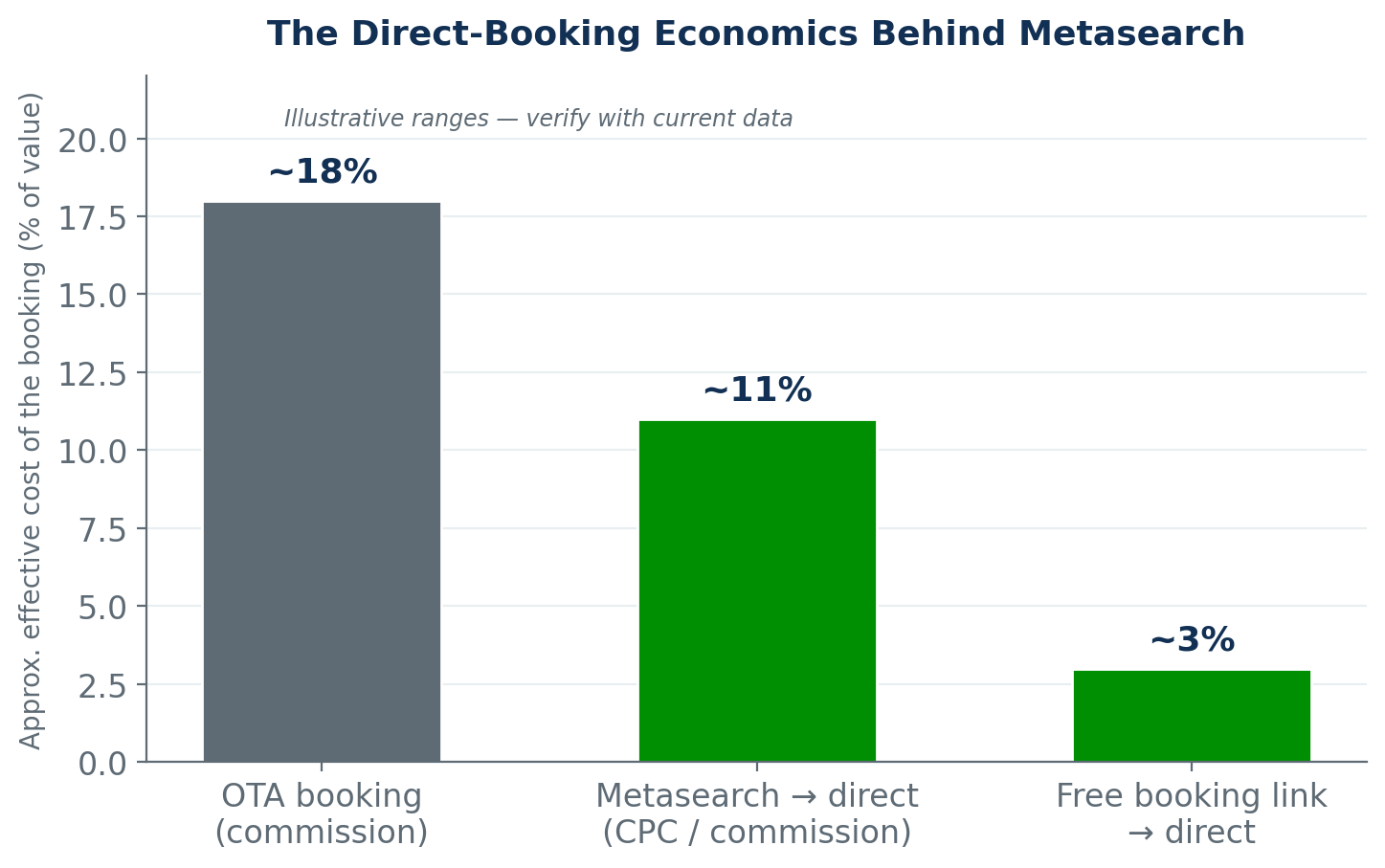
The reason to fight for the metasearch click is simple: a direct booking usually costs less than an OTA booking. An OTA takes a commission on every stay. A metasearch-driven direct booking costs you the bid (or a lower metasearch commission) — and a free-booking-link direct booking costs almost nothing. The same room night, at a materially different cost of sale.
Where RevEvolve fits (and where it doesn’t)
RM Copilot is an operator-facing AI revenue copilot. It analyzes demand, simulates outcomes, and recommends the pricing moves that keep your direct rate competitive — the number-one driver of metasearch placement — then your team reviews and applies them. It surfaces where your rate is slipping against the market so a parity or competitiveness problem gets caught before it quietly loses you the click. It does not auto-publish rates, and it does not manage ad bids. You keep control.
Google Hotel Ads: three common objections
Win on rate, not just on spend
Google Hotel Ads looks like a bidding war, and OTAs would love for you to play it that way — they have the deeper budgets. But metasearch rewards the most competitive, consistent rate at least as much as the biggest bid. Fix parity, turn on free booking links, price to win, and send the click somewhere that converts. The bid is the last lever, not the first.
Done in that order, metasearch turns from an expensive experiment into one of the cheapest direct-booking channels you have — and every booking you win there is one you didn’t hand to an OTA.
Keep going: Direct bookings vs OTAs · Hotel rate parity · Hotel distribution channels · Hotel rate shopping.