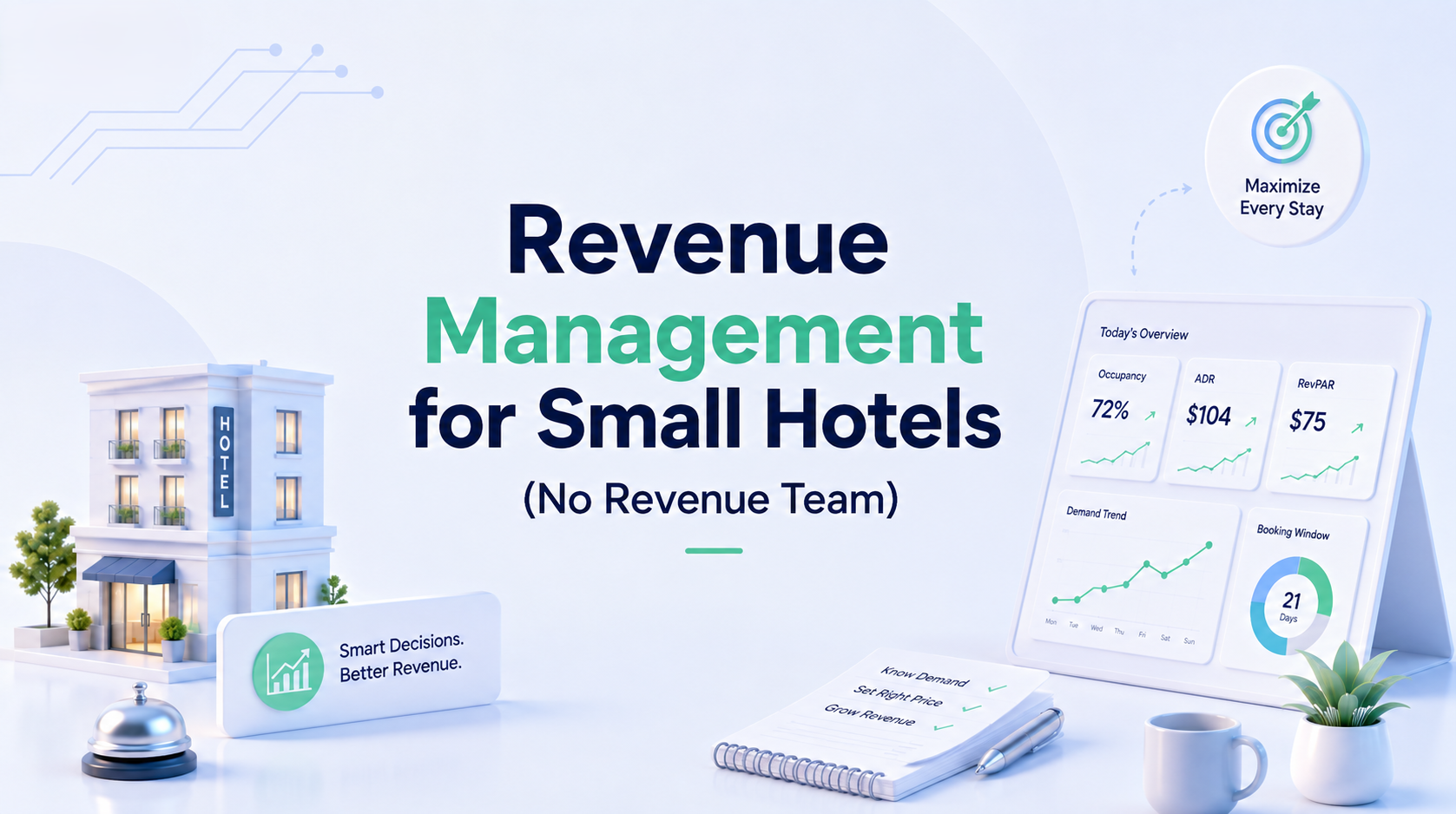
SNIPPET DEFINITION — Revenue management for small hotels is the practice of charging the right rate at the right time to make the most of the rooms you have — without needing a dedicated revenue team. For an independent, it comes down to knowing a few key numbers, watching a handful of competitors, pricing to demand, managing your channel mix, and setting a few simple rules. Thirty minutes a week beats a fancy system nobody touches.
You’re the general manager. You’re also, depending on the hour, the front desk, the maintenance dispatcher, the breakfast fixer, and the person answering the 11pm phone. Somewhere on that list is “revenue management,” and it’s the one that quietly falls off every week — not because it doesn’t matter, but because there’s no one whose job it is and never quite enough time.
Here’s the good news: revenue management for a small hotel doesn’t require a team, a big budget, or a complicated system. It requires a simple routine. This is that routine — what to do, in about 30 minutes a week, to stop leaving money on the table.
I’m the GM, the front desk, and the revenue manager. Our rate has been the same for two years. I know that’s costing us — I just never have time to fix it.
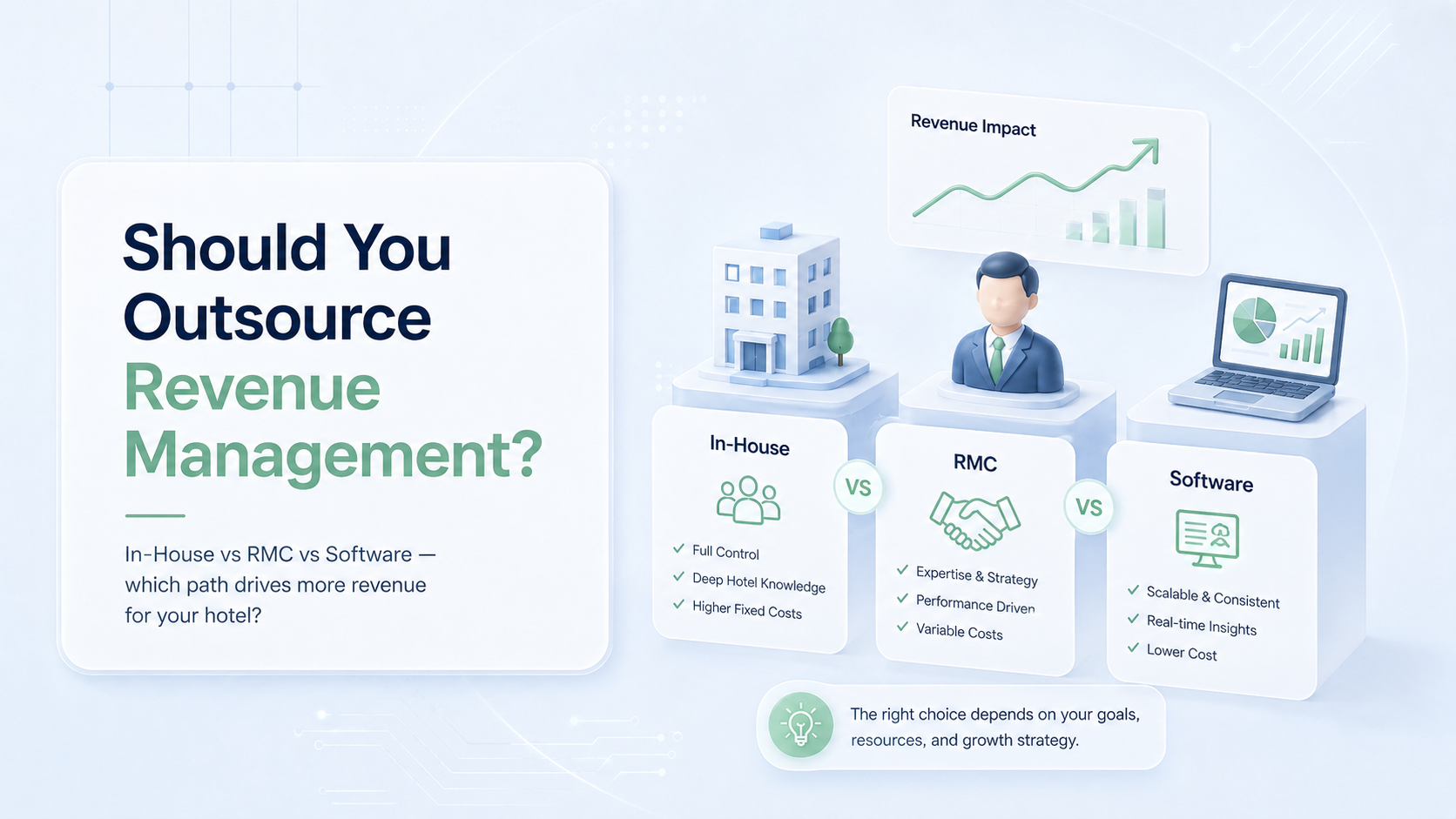
Quick scope note: this is the do-it-yourself guide — how a GM runs revenue management without hiring a team. If you’d rather hand it to an external service, our guide on when to outsource it covers that path.
Key takeaways
- RM isn’t just for big branded hotels — small hotels leave the most on the table.
- You already do a version of it; a routine makes it deliberate.
- A working weekly routine takes about 30 minutes.
- Static, set-and-forget rates are the most common (and costly) mistake.
- You don’t need to hire a revenue manager to get most of the benefit.
Why small hotels skip revenue management (and what it costs)
Most small hotels don’t skip revenue management on purpose. They skip it for three very understandable reasons: no time, no team, and a quiet belief that RM is something only big hotels with analysts do.
The cost of skipping it is real, though, and it hides in plain sight. A rate that hasn’t moved in two years is too low on your best nights and too high on your worst. A midweek that never gets a nudge sits half-empty. An over-reliance on OTAs hands away commission you didn’t have to pay. None of these show up as a bill — they show up as revenue that simply never arrived.
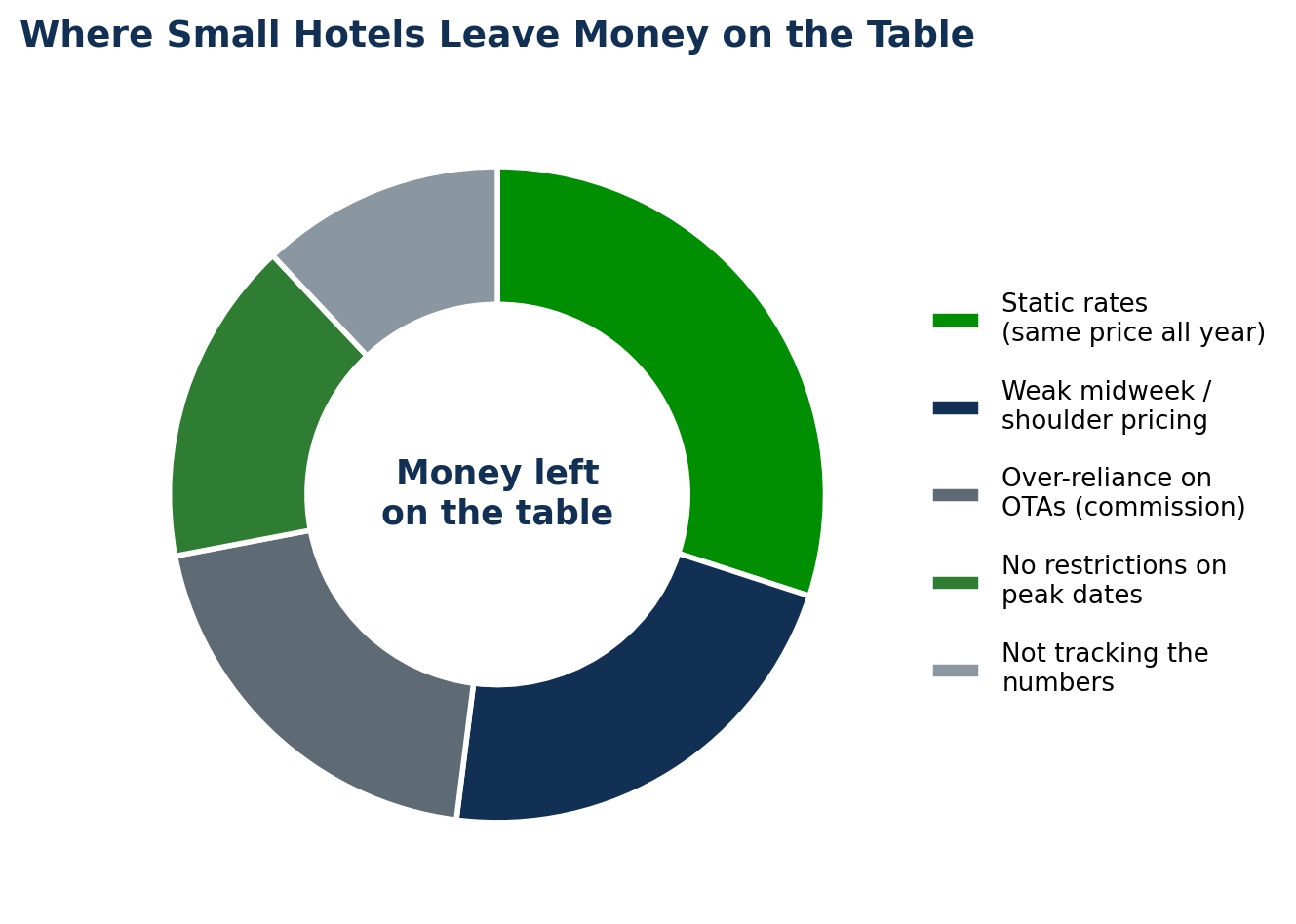
Ironically, small hotels often have the most to gain from revenue management precisely because they’ve done the least of it. The first simple habits move the needle the most.
What revenue management actually is (you already do some)
The goal isn’t to turn you into an analyst. It’s to make those instincts a little more deliberate and a little more regular, so the good calls happen every week instead of only when you happen to notice. A routine is what turns scattered instinct into steady revenue.
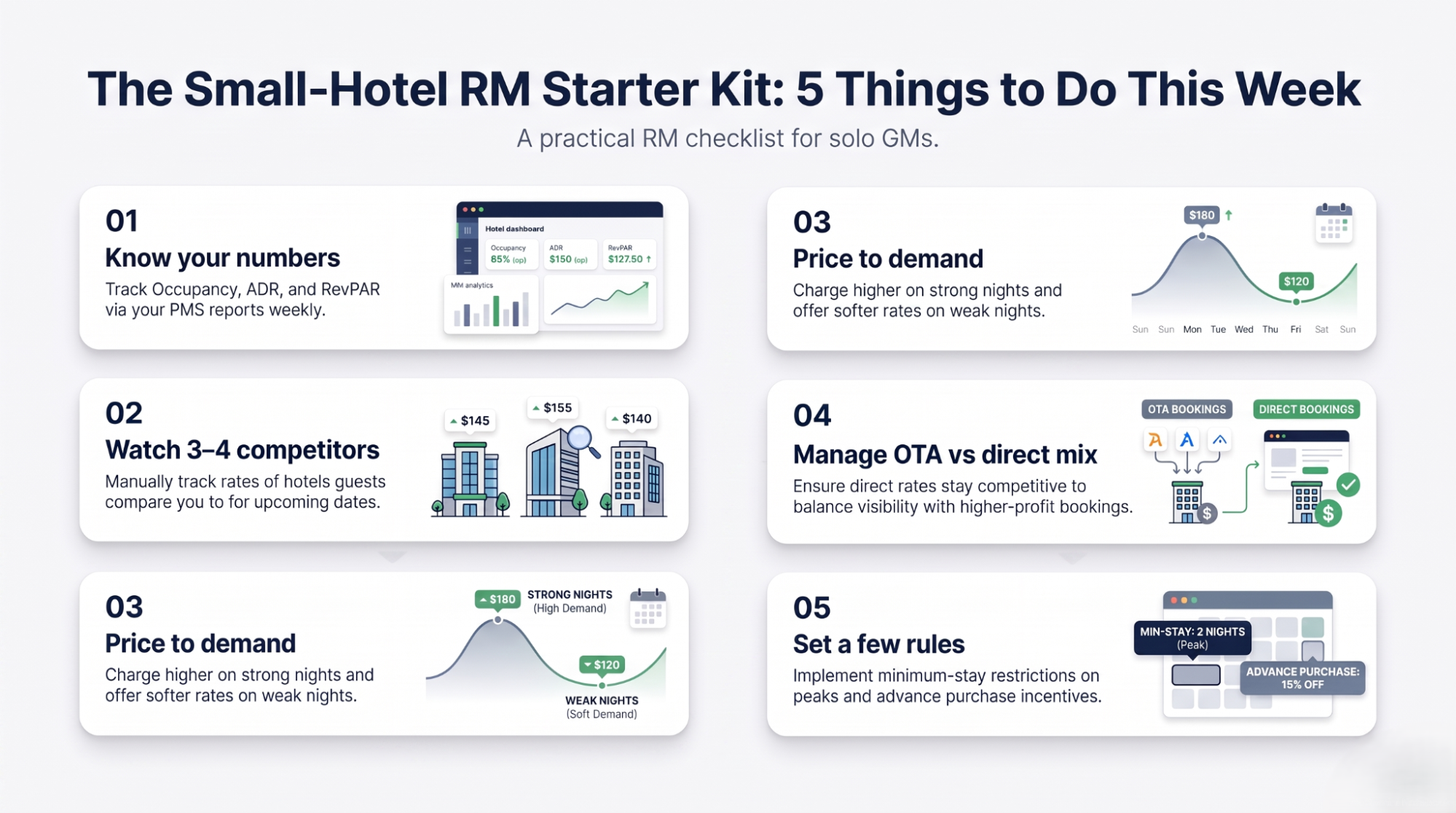
The small-hotel RM starter kit: 5 things that matter
You don’t need to do everything. You need to do these five things, and do them consistently.
1 · Know your numbers
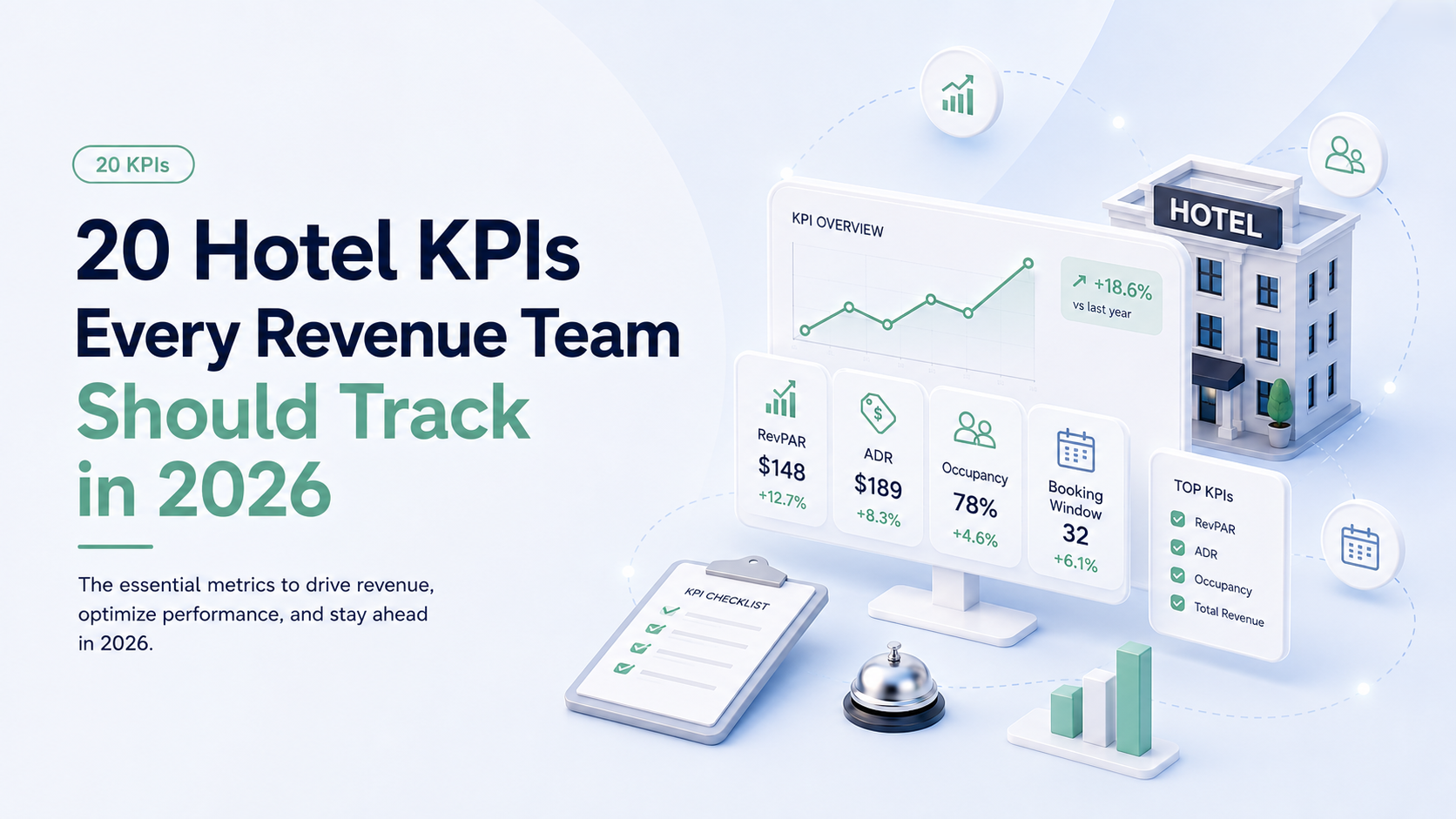
Three numbers tell you almost everything: occupancy (how full you are), ADR (your average rate), and RevPAR (revenue per available room, which ties the two together). You don’t need a dashboard — your PMS reports these. If the terms are fuzzy, the know your KPIs guide is a quick primer. Watch RevPAR week to week; it’s the single best pulse-check.
2 · Watch a few competitors
You don’t need an expensive rate-shopping tool. Pick three or four hotels guests actually compare you to, and check their rates for the next few weekends and any big local dates. If everyone’s full and priced high and you’re not, that’s a signal.
3 · Price to demand
This is the heart of it: charge more when demand is high, less when it’s soft. A local festival, a graduation, a conference — those are higher-rate nights. A dead midweek in the off-season is a lower-rate (or promotion) night. That’s the basic idea behind dynamic pricing, and you can do a simple version by hand.
4 · Manage your channel mix
OTAs bring bookings, but they take a commission. Your own website doesn’t. You don’t have to leave the OTAs — just make sure your direct rate is at least as good, so guests have a reason to book with you, and you keep more of every direct booking.
5 · Set a few simple rules
A minimum-stay on your busiest weekends keeps one-night bookings from blocking two-night guests. An advance-purchase rate captures early planners. You don’t need dozens of rules — two or three, on the dates that matter, do most of the work.
Your 30-minute weekly revenue routine
Here’s the whole thing as a routine you can run once a week — pick a quiet 30 minutes, same time each week, and go in order.
- Check your pickup and pace — how are the next few weeks filling versus this time last week?
- Scan three or four competitors for upcoming weekends and big local dates.
- Adjust rates for demand — raise where you’re filling fast, nudge down where you’re soft.
- Check your OTA-versus-direct mix and make sure your direct rate is competitive.
- Set or release restrictions — add a min-stay on a peak, drop one that’s no longer needed.
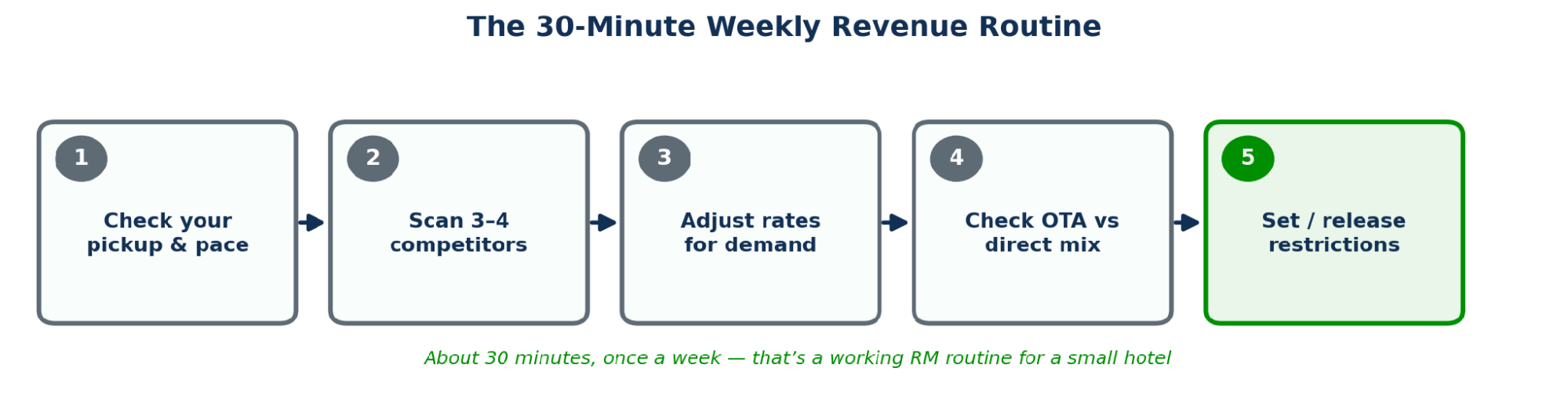
That’s a real revenue management practice. It won’t be as fast or as thorough as a full-time analyst with a system — but done every week, it captures most of the upside, and it beats the set-and-forget rate every single time.
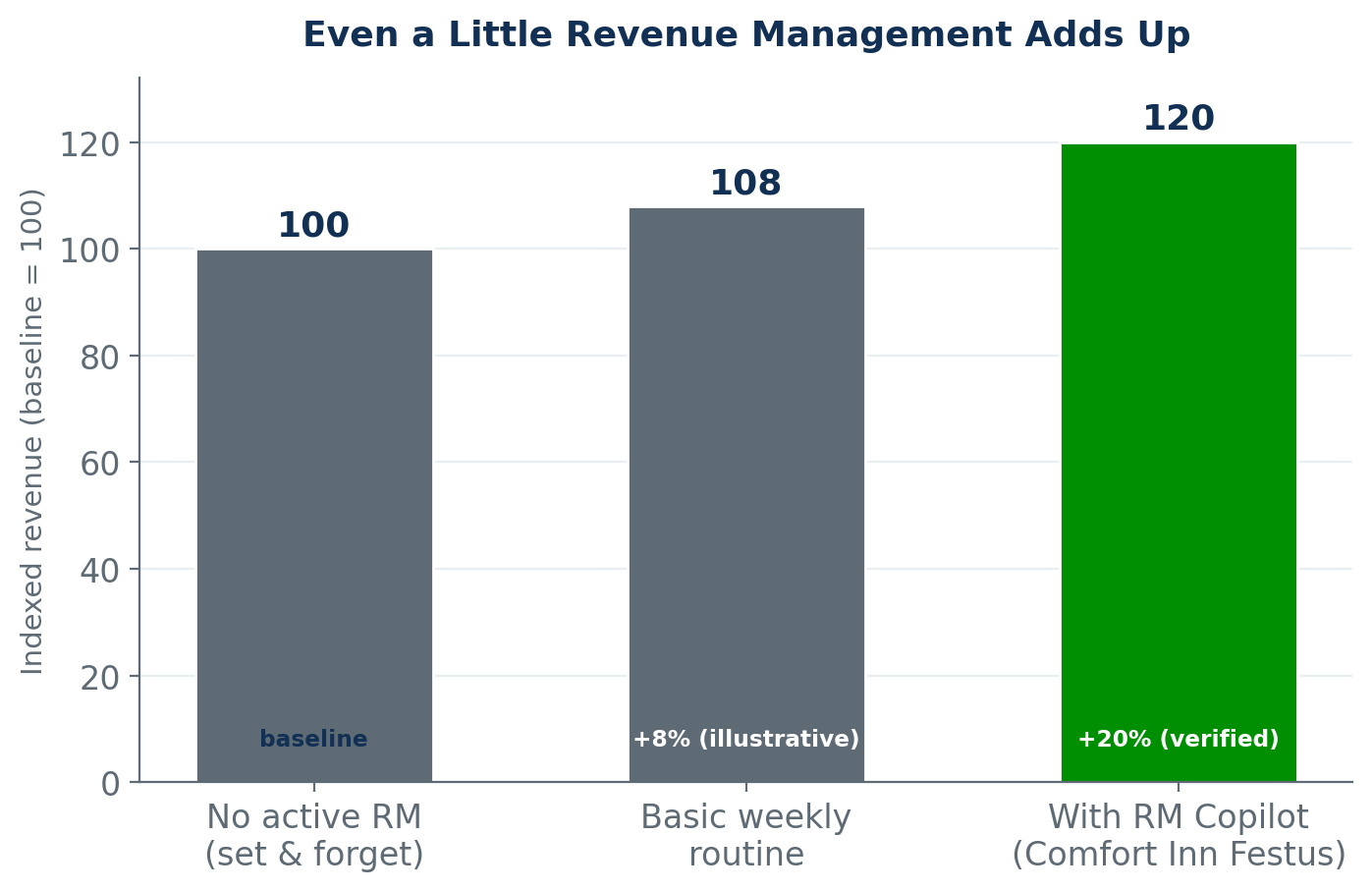
Common mistakes small hotels make
- Set-and-forget rates — the same price all year is wrong nearly every day of it.
- Ignoring midweek and shoulder nights — the soft periods are where a small nudge does the most.
- Racing OTAs to the bottom — matching a competitor’s cut on a strong date just leaves money behind.
- Flying blind — not looking at the numbers, so you can’t tell a good week from a lucky one.
DIY, outsource, or a copilot: getting help
There are three honest ways to run revenue management at a small hotel, and the right one depends on your time and budget. First, do it yourself with the routine above — free, and enough for many small properties. Second, outsource it to an external revenue service — more hands-off, at a monthly cost. Third, use a revenue copilot: software that does the analysis a solo GM doesn’t have time for and hands you the recommendations to apply.
| Option | Best when | Trade-off |
|---|---|---|
| DIY routine | Tight budget, one property, you have 30 min/week | Your time; less thorough than a pro |
| Outsource to a service | You want it fully off your plate | Monthly cost; less day-to-day control |
| Revenue copilot | You want the analysis done but the decisions yours | A tool to learn; recommends, you apply |
How RevEvolve helps small hotels without a team
RM Copilot is built for exactly this situation: a hotel that needs revenue management but doesn’t have a revenue manager. It’s an operator-facing AI revenue copilot — it does the analysis a busy GM has no time for, watches demand and your comp set, simulates outcomes, and recommends the pricing moves with the reasoning attached. Then you review and apply them. It doesn’t auto-publish rates or push to your systems; you stay in control. For an independent hotel, it’s the closest thing to a revenue team without the hire.
Small-hotel revenue management: three objections
You don’t need a team — you need a routine
Revenue management has a reputation as a big-hotel discipline, run by analysts with systems. It isn’t. At its core it’s charging the right rate at the right time, and a small hotel can do a genuinely effective version of it in 30 minutes a week — no team, no big budget, no complicated software.
Start with the routine. Fix the set-and-forget rate, watch a few competitors, price to demand, mind your channels, and set a couple of rules. The money you’ve been leaving on the table has been there the whole time — this is how you start bringing it in.
Keep going: The 20 hotel KPIs · Should you outsource revenue management? · Hotel pricing strategy · For independent hotels.