

Case Studies

View all

Discover how top brands achieved remarkable results with RevEvolve.

Explore strategies, successes, and insights from real-world examples.

RM Copilot Case Study: AI Revenue Management

How RM Copilot by RevEVOLVE eliminates 60–70% of hotel revenue managers' repetitive tasks, delivers +5–8% RevPAR lift, and enables one RM to manage 22+ properties. Full ROI case study with verified data.

RM Copilot vs Human Revenue Managers

Real hotel case study. AI optimized pricing and timing to deliver +13.7% RevPAR, near-sellout occupancy, and higher net revenue in just 10 days.

FAQs

Explore detailed answers to the most frequently asked questions about RevEvolve.

Get clear, step-by-step guidance to maximize the platform’s features and benefits.

Whitepapers

In-Depth Industry Research & Proven Strategies

Access comprehensive whitepapers packed with data-driven insights, expert analysis, and proven strategies to help you drive smarter decisions and sustainable revenue growth.

Explore expert insights, tips, and the latest trends in revenue management to boost your financial strategies and drive growth.

AI-Driven Strategy | Harikrishna Patel February 3, 2024

The Intersection of Marketing and Revenue Management

The Intersection of Marketing and Revenue Management

In the competitive landscape of the hospitality industry, marketing and revenue management are two critical functions that drive business success. While each discipline has its distinct objectives—marketing focuses on attracting and engaging customers, and revenue management aims to optimize financial performance—their integration is essential for achieving holistic business growth. Understanding and leveraging the intersection of marketing and revenue management can lead to more effective strategies, improved profitability, and enhanced guest experiences.

Understanding the Roles

Marketing is responsible for creating awareness, generating interest, and driving demand for a hotel or service. It encompasses a range of activities, including branding, advertising, promotions, and public relations. The primary goal of marketing is to attract potential guests and influence their booking decisions.

Revenue Management, on the other hand, focuses on optimizing revenue through strategic pricing and inventory control. It involves forecasting demand, setting dynamic pricing strategies, and managing distribution channels to maximize profitability. Revenue management ensures that the right price is charged for the right room at the right time.

Key Areas of Intersection

Data-Driven Insights

Both marketing and revenue management rely heavily on data to make informed decisions. Marketing uses data to understand customer behavior, preferences, and trends, while revenue management uses data to forecast demand, optimize pricing, and manage inventory. By sharing data and insights, marketing and revenue management teams can develop more accurate forecasts, create targeted promotions, and refine pricing strategies. For example, marketing campaigns can be tailored based on revenue management data that identifies peak booking periods and target audience segments.

Integrated Pricing Strategies

Effective pricing strategies often require collaboration between marketing and revenue management. While revenue management sets prices based on demand and market conditions, marketing can influence these strategies by running promotional campaigns, offering discounts, or creating special packages. Integrating marketing and revenue management efforts ensures that promotional pricing aligns with overall revenue goals and market conditions, optimizing both guest acquisition and profitability.

Targeted Promotions and Offers

Marketing campaigns can drive demand through targeted promotions and special offers, while revenue management can adjust pricing and inventory to capitalize on these promotions. For instance, a marketing campaign promoting a limited-time discount can be supported by revenue management strategies that ensure availability and optimize pricing during the promotion period. Coordinating these efforts maximizes the impact of promotions and enhances revenue potential.

Customer Segmentation and Personalization

Understanding customer segments and preferences is crucial for both marketing and revenue management. Marketing uses segmentation to create personalized campaigns and offers, while revenue management uses this information to optimize pricing and availability for different customer segments. By aligning marketing and revenue management strategies, hotels can deliver personalized experiences and pricing that appeal to specific guest segments, leading to higher conversion rates and increased revenue.

Enhanced Guest Experience

Both marketing and revenue management aim to enhance the guest experience, though from different angles. Marketing focuses on attracting guests and setting expectations through brand messaging and promotions, while revenue management ensures that guests receive value for their money through optimal pricing and availability. By working together, these functions can create a seamless experience that meets guest expectations and drives loyalty.

Competitive Analysis

Marketing and revenue management teams can collaborate on competitive analysis to gain insights into market trends and competitor strategies. Marketing can assess competitors’ branding and promotional tactics, while revenue management evaluates their pricing and inventory strategies. This combined analysis helps hotels stay competitive by adjusting their own marketing and pricing strategies in response to market conditions and competitor actions.

Performance Metrics and Reporting

Measuring the success of marketing and revenue management strategies requires tracking and analyzing key performance metrics. Marketing metrics include campaign performance, conversion rates, and return on investment (ROI), while revenue management metrics focus on occupancy rates, average daily rate (ADR), and revenue per available room (RevPAR). By integrating these metrics, hotels can evaluate the overall effectiveness of their combined marketing and revenue management efforts and make data-driven decisions for future strategies.

Benefits of Integration

  • Optimized Revenue: Coordinating marketing and revenue management efforts ensures that promotional campaigns align with pricing strategies, maximizing revenue opportunities and minimizing revenue leakage.
  • Enhanced Guest Experience: Integrating marketing and revenue management creates a cohesive guest experience, from the initial marketing message to the final booking experience, leading to higher guest satisfaction and loyalty.
  • Increased Efficiency: Collaboration between marketing and revenue management streamlines processes and reduces duplication of efforts, resulting in more efficient operations and better use of resources.
  • Improved Decision-Making: Sharing data and insights between marketing and revenue management enables more informed decision-making, leading to more effective strategies and improved business performance.

Conclusion

The intersection of marketing and revenue management is a critical area for driving success in the hospitality industry. By integrating these functions, hotels can develop more effective strategies, optimize pricing, and enhance the guest experience. Collaboration between marketing and revenue management teams leads to a more cohesive approach to attracting guests and maximizing revenue, ultimately contributing to business growth and profitability.

Share on

Harry Sheta is a hospitality technology entrepreneur focused on helping hotels make faster, smarter revenue decisions. As Co-Founder of Hotel Switchboard and the driving force behind RevEVOLVE, he works closely with hoteliers, revenue managers, and management companies to modernize how pricing, forecasting, and portfolio insights are delivered.

Latest Blogs

AI-Driven Strategy 26 March 2026

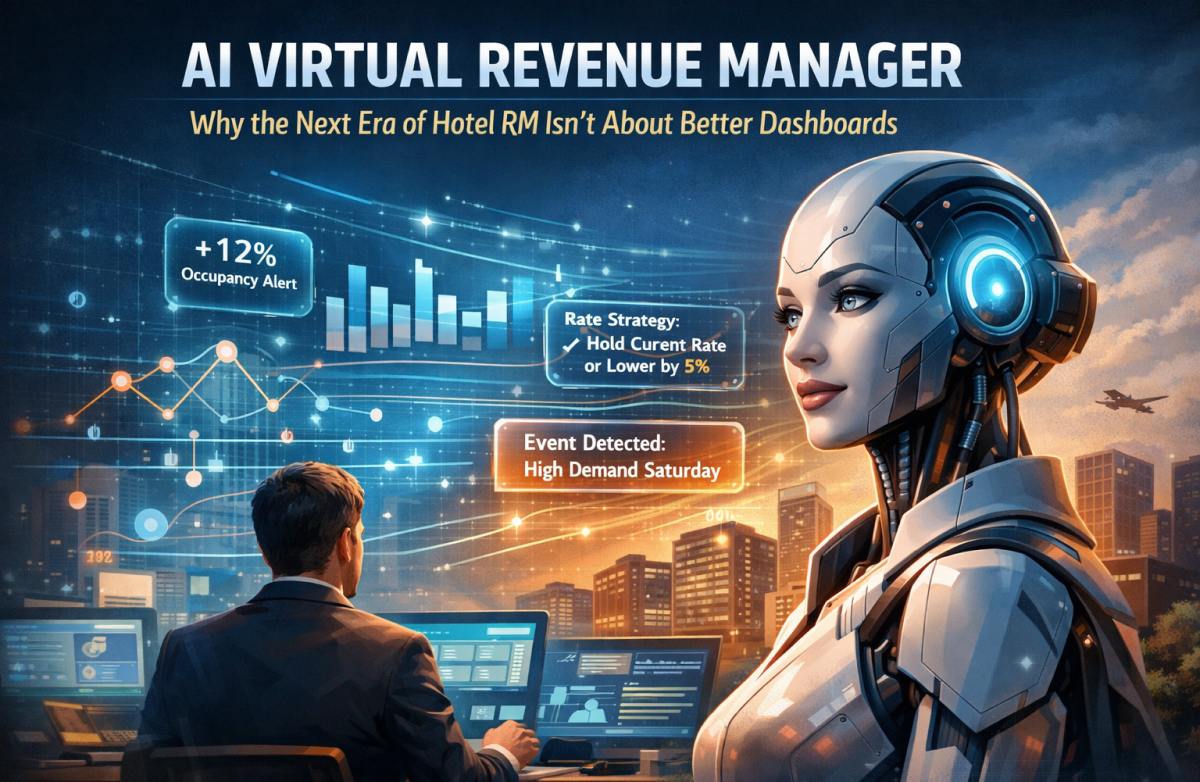
AI Virtual Revenue Manager: Why the Next Era of Hotel RM Isn’t About Better Dashboards

The next evolution in hotel revenue management isn’t a faster dashboard or a smarter pricing algorithm – it’s an AI…


Harikrishna Patel
Harikrishna Patel
Co-Founder, Hotel Switchboard
AI-Driven Strategy 09 March 2026

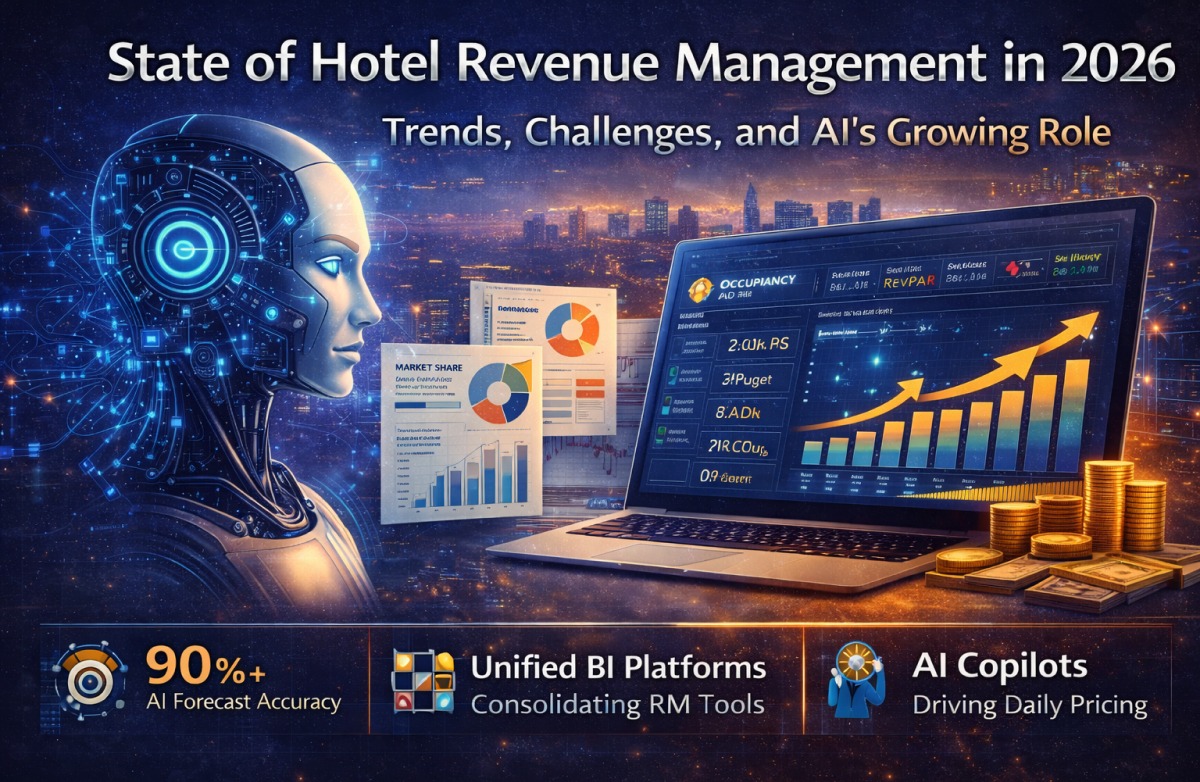
State of Hotel Revenue Management in 2026: Trends, Challenges, and AI’s Growing Role

Hotel revenue management in 2026 is defined by three fundamental shifts: AI-powered demand forecasting now achieves accuracy rates exceeding 90%,…

Harikrishna Patel
Harikrishna Patel
Co-Founder, Hotel Switchboard
AI-Driven Strategy 03 March 2026

Los Angeles World Cup 2026: Opening Match Hotel Pricing Strategy for SoFi Stadium

Los Angeles will host eight FIFA World Cup 2026 matches at SoFi Stadium, including the USA’s opening match against Paraguay…

Harikrishna Patel
Harikrishna Patel
Co-Founder, Hotel Switchboard
contact us

Ready to Transform Your Revenue Strategy?

Join the ranks of successful hoteliers who are leveraging AI to maximize their revenue. Get started today and see the difference our solution can make.