

AI Virtual Revenue Manager: Why the Next Era of Hotel RM Isn’t About Better Dashboards
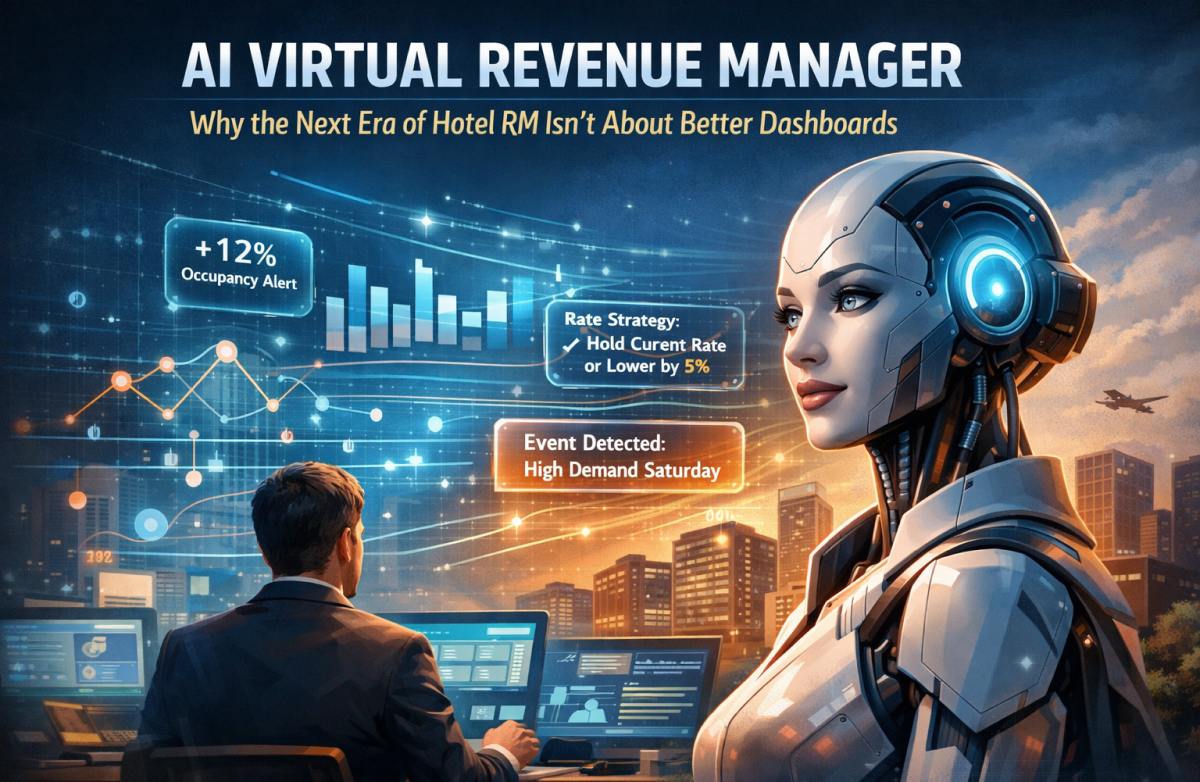
The next evolution in hotel revenue management isn’t a faster dashboard or a smarter pricing algorithm – it’s an AI…
Discover tailored revenue strategies that help
maximize occupancy, optimize pricing, and
boost profitability.
Get tips, insights, and expert advice to maximize performance.
Explore strategies, successes, and insights from real-world examples.
Get clear, step-by-step guidance to maximize the platform’s features and benefits.
Access comprehensive whitepapers packed with data-driven insights, expert analysis, and proven strategies to help you drive smarter decisions and sustainable revenue growth.
Explore expert insights, tips, and the latest trends in revenue management to boost your financial strategies and drive growth.
Support | Harikrishna Patel February 25, 2024
In the ever-evolving hospitality industry, integrating technology into your revenue management process is essential for optimizing performance and maximizing profitability. Technological advancements offer powerful tools that enhance decision-making, streamline operations, and boost financial outcomes. This blog explores how integrating technology can transform your revenue management strategy and provide a competitive edge.
Integrating technology into revenue management involves utilizing advanced software, data analytics, and automation tools to improve pricing strategies, demand forecasting, and inventory management. By leveraging these technologies, hotels can make data-driven decisions and respond proactively to market changes.
RMS software uses algorithms and real-time data to adjust room rates based on demand, competition, and market conditions. This ensures that pricing is optimized continuously, capturing maximum revenue opportunities.
RMS tools analyze historical data and market trends to predict future demand. Accurate forecasts enable hotels to adjust pricing and inventory strategies proactively, improving occupancy and revenue.
BI tools provide dashboards and reports that visualize key performance indicators (KPIs), such as occupancy rates, average daily rate (ADR), and revenue per available room (RevPAR). These insights help revenue managers make informed decisions and identify trends.
BI tools analyze historical performance data and market trends to identify patterns and opportunities. This analysis supports strategic planning and helps hotels optimize their revenue management strategies.
CRM systems collect and integrate guest data from various touchpoints, such as booking engines, property management systems (PMS), and social media. This data provides insights into guest preferences and behaviors, enabling personalized pricing and targeted marketing efforts.
CRM systems manage loyalty programs and track guest interactions, allowing hotels to offer personalized rewards and incentives. Tailored offers based on guest history and preferences enhance guest satisfaction and drive repeat business.
Channel management software helps hotels manage and distribute their inventory across multiple online booking platforms and travel agencies. This ensures that availability and pricing are consistent across all channels, reducing overbookings and optimizing revenue.
Channel managers maintain rate parity across different booking channels, ensuring that rates are uniform and competitive. This consistency helps avoid rate discrepancies and builds trust with guests.
AI and ML algorithms analyze large volumes of data to predict future trends and demand patterns. These predictions inform pricing strategies, promotional offers, and inventory management, improving overall revenue optimization.
Mobile booking platforms and apps provide guests with a seamless booking experience. Optimizing your website and booking process for mobile devices ensures accessibility and convenience, leading to increased bookings and revenue.
Online booking platforms offer opportunities to encourage direct bookings through special promotions, loyalty rewards, and user-friendly interfaces. Direct bookings reduce commission costs and increase profitability.
Integrating technology into your revenue management process is crucial for achieving financial success and staying competitive in the hospitality industry. By leveraging advanced systems and tools, such as revenue management software, business intelligence, CRM systems, and AI-driven analytics, hotels can optimize pricing, forecast demand, and improve overall performance. Embracing technology enhances decision-making, efficiency, and profitability, positioning your hotel for long-term success in a dynamic market.
Share onHarry Sheta is a hospitality technology entrepreneur focused on helping hotels make faster, smarter revenue decisions. As Co-Founder of Hotel Switchboard and the driving force behind RevEVOLVE, he works closely with hoteliers, revenue managers, and management companies to modernize how pricing, forecasting, and portfolio insights are delivered.
Revenue Management 26 Mar 2026
Revenue Management 09 Mar 2026
AI-Driven Strategy 03 Mar 2026
Market Insights 16 Feb 2026
Revenue Management 30 Jan 2026
Revenue Management 27 Jan 2026
Revenue Management 19 Jan 2026
Revenue Management 12 Jan 2026
Revenue Management 29 Dec 2025
Revenue Management 19 Dec 2025
The next evolution in hotel revenue management isn’t a faster dashboard or a smarter pricing algorithm – it’s an AI…
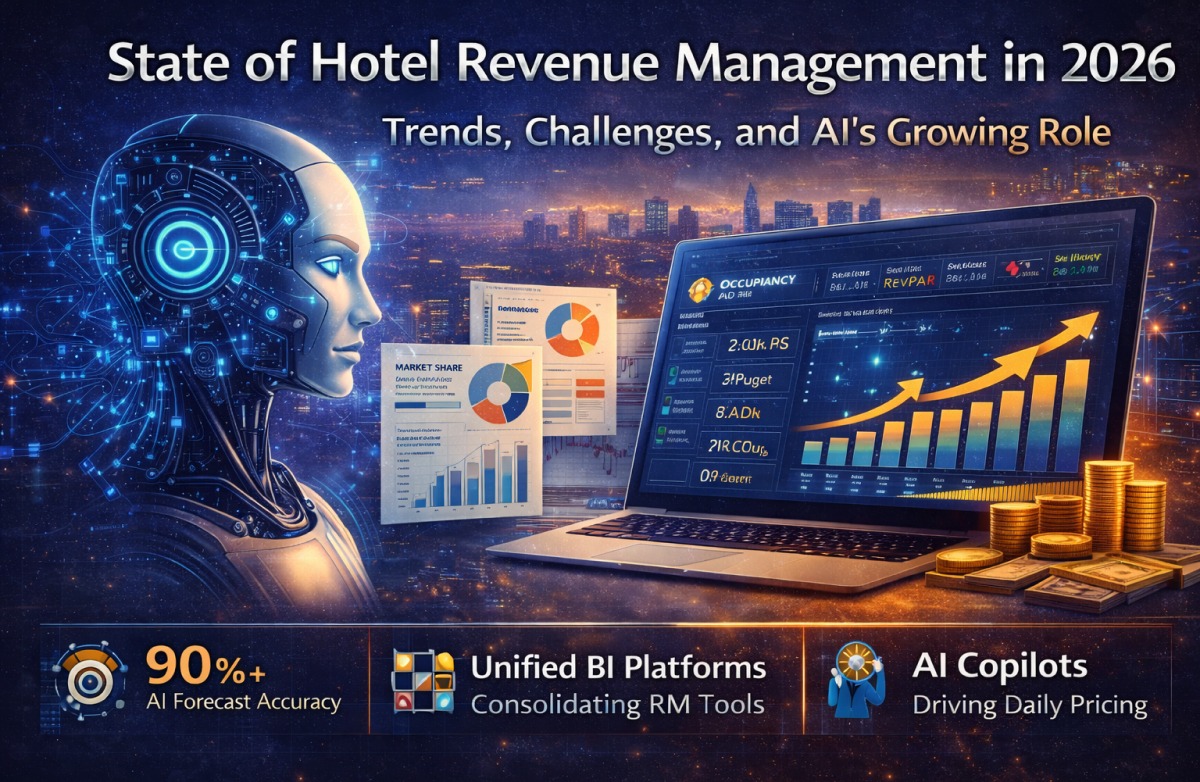
Hotel revenue management in 2026 is defined by three fundamental shifts: AI-powered demand forecasting now achieves accuracy rates exceeding 90%,…
Los Angeles will host eight FIFA World Cup 2026 matches at SoFi Stadium, including the USA’s opening match against Paraguay…
Join the ranks of successful hoteliers who are leveraging AI to maximize their revenue. Get started today and see the difference our solution can make.