

AI Virtual Revenue Manager: Why the Next Era of Hotel RM Isn’t About Better Dashboards
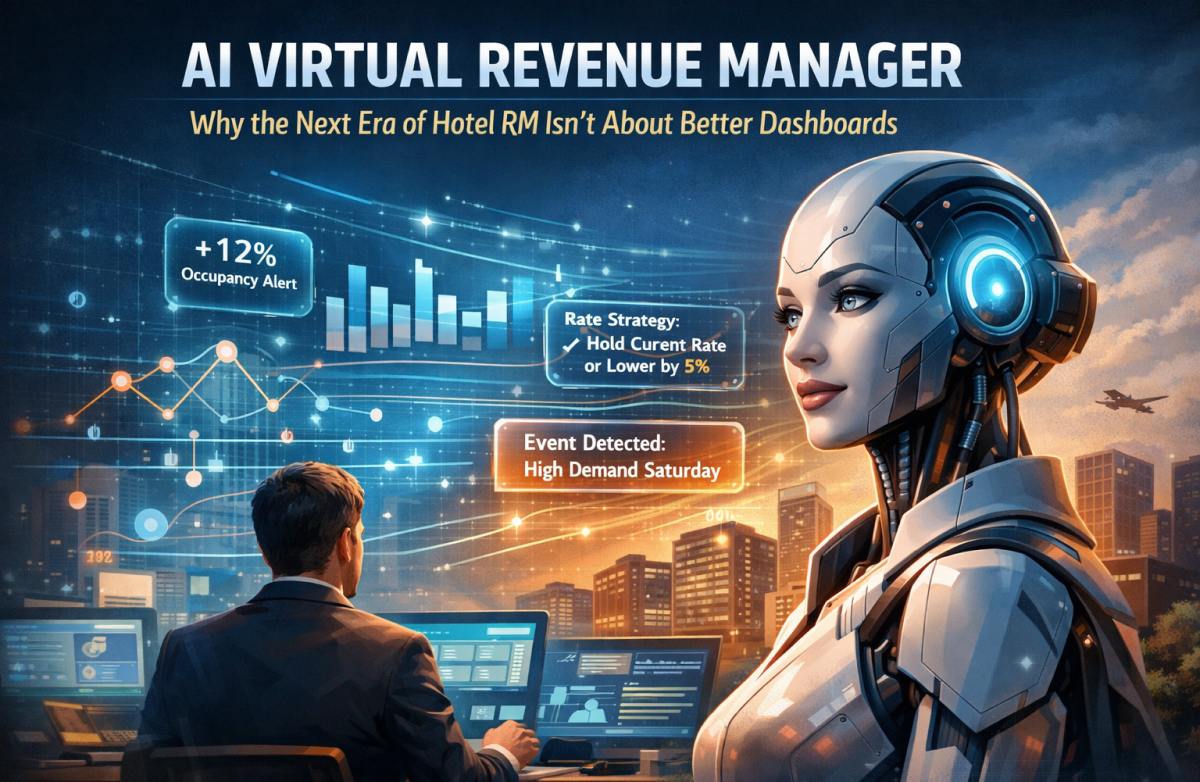
The next evolution in hotel revenue management isn’t a faster dashboard or a smarter pricing algorithm – it’s an AI…
Discover tailored revenue strategies that help
maximize occupancy, optimize pricing, and
boost profitability.
Get tips, insights, and expert advice to maximize performance.
Explore strategies, successes, and insights from real-world examples.
Get clear, step-by-step guidance to maximize the platform’s features and benefits.
Access comprehensive whitepapers packed with data-driven insights, expert analysis, and proven strategies to help you drive smarter decisions and sustainable revenue growth.
Explore expert insights, tips, and the latest trends in revenue management to boost your financial strategies and drive growth.
AI-Driven Strategy | Harikrishna Patel February 2, 2024
In today’s digital age, data is a crucial asset for any business, and the hospitality industry is no exception. With the vast amounts of data generated from various sources, hotels can leverage data analytics to make informed decisions and optimize their revenue management strategies. Harnessing the power of data analytics in revenue management enables hotels to maximize profitability, enhance guest satisfaction, and stay ahead of the competition. Here’s how you can effectively use data analytics in revenue management.
Data analytics involves collecting, processing, and analyzing data to extract meaningful insights. In the context of revenue management, it helps hotels understand demand patterns, customer behavior, and market trends. By transforming raw data into actionable insights, hotels can make data-driven decisions to improve pricing, distribution, and marketing strategies.
Implementing data analytics in revenue management offers several benefits:
To effectively harness the power of data analytics, hotels should focus on analyzing various types of data. Historical data, such as past booking patterns and occupancy rates, provides insights into trends and performance. Market data, including competitor pricing and economic indicators, helps hotels stay competitive and responsive to external factors. Customer data, such as guest preferences and booking channels, enables personalized marketing and improved guest experiences. Operational data, including staff performance and inventory levels, helps optimize day-to-day operations. Additionally, review and feedback data from online platforms offer valuable insights into guest satisfaction and areas for improvement.
Several tools and technologies can help hotels leverage data analytics for revenue management. Revenue Management Systems (RMS) analyze historical and real-time data to provide pricing recommendations and demand forecasts. Customer Relationship Management (CRM) systems manage and analyze customer interactions and data throughout the guest lifecycle. Business Intelligence (BI) tools, like Tableau, Power BI, and Google Data Studio, enable data visualization and reporting. Predictive analytics software uses machine learning algorithms to predict future demand and customer behavior, helping hotels stay ahead of trends.
Implementing data analytics in revenue management involves several key steps. First, collect data from various sources, such as property management systems (PMS), CRM systems, and online review platforms. Integrate this data into a unified system to ensure easy access and analysis. Next, clean the data to ensure accuracy by removing duplicates, correcting errors, and standardizing formats. Analyze the data to identify patterns, trends, and correlations. Generate actionable insights based on the analysis to inform decision-making. Develop pricing, distribution, and marketing strategies based on these insights, and continuously monitor performance to make necessary adjustments.
Data analytics has numerous real-world applications in revenue management. Dynamic pricing, for example, involves adjusting room rates in real time based on demand fluctuations, competitor pricing, and market conditions. Personalized marketing leverages customer segmentation and preferences to create targeted campaigns that resonate with specific guest groups. Demand forecasting predicts future demand to optimize inventory management and staffing levels. Performance benchmarking compares metrics with competitors to identify strengths and areas for improvement.
While data analytics offers numerous benefits, hotels may face challenges in implementation. Data silos, or isolated data sources, can hinder comprehensive analysis. Integrating data from various systems is crucial for a unified view. Data quality issues, such as inaccuracies or incompleteness, can lead to incorrect insights. Regular data cleaning and validation are essential to ensure reliability. Skill gaps, or a lack of expertise in data analytics, can be a barrier. Investing in training or hiring skilled professionals can help address this challenge. Additionally, implementing data analytics tools and systems can be costly, but the long-term benefits often outweigh the initial investment.
Harnessing the power of data analytics in revenue management is no longer optional but a necessity for hotels aiming to thrive in a competitive market. By leveraging data analytics, hotels can make informed decisions, optimize their revenue strategies, and enhance guest experiences. Embracing this data-driven approach will not only improve profitability but also ensure long-term success in the ever-evolving hospitality industry.
Share onHarry Sheta is a hospitality technology entrepreneur focused on helping hotels make faster, smarter revenue decisions. As Co-Founder of Hotel Switchboard and the driving force behind RevEVOLVE, he works closely with hoteliers, revenue managers, and management companies to modernize how pricing, forecasting, and portfolio insights are delivered.
Revenue Management 26 Mar 2026
Revenue Management 09 Mar 2026
AI-Driven Strategy 03 Mar 2026
Market Insights 16 Feb 2026
Revenue Management 30 Jan 2026
Revenue Management 27 Jan 2026
Revenue Management 19 Jan 2026
Revenue Management 12 Jan 2026
Revenue Management 29 Dec 2025
Revenue Management 19 Dec 2025
The next evolution in hotel revenue management isn’t a faster dashboard or a smarter pricing algorithm – it’s an AI…

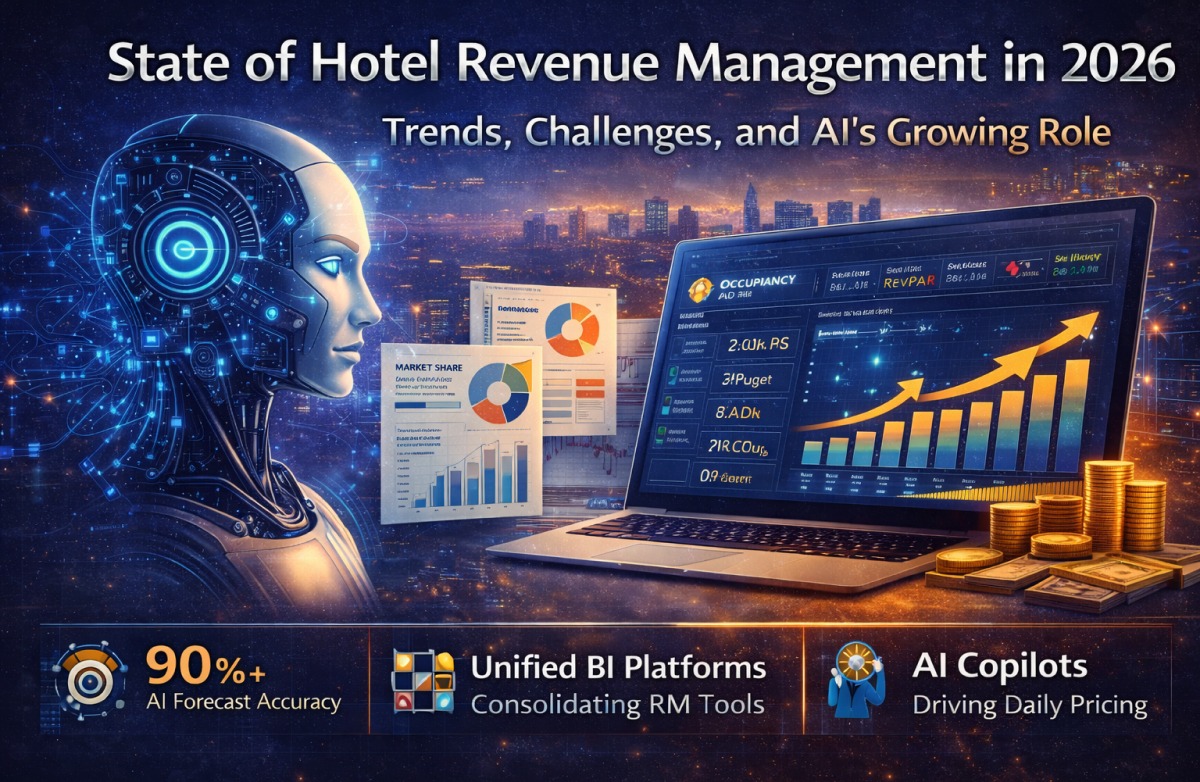
Hotel revenue management in 2026 is defined by three fundamental shifts: AI-powered demand forecasting now achieves accuracy rates exceeding 90%,…
Los Angeles will host eight FIFA World Cup 2026 matches at SoFi Stadium, including the USA’s opening match against Paraguay…
Join the ranks of successful hoteliers who are leveraging AI to maximize their revenue. Get started today and see the difference our solution can make.