

Case Studies

View all

Discover how top brands achieved remarkable results with RevEvolve.

Explore strategies, successes, and insights from real-world examples.

RM Copilot Case Study: AI Revenue Management

How RM Copilot by RevEVOLVE eliminates 60–70% of hotel revenue managers' repetitive tasks, delivers +5–8% RevPAR lift, and enables one RM to manage 22+ properties. Full ROI case study with verified data.

RM Copilot vs Human Revenue Managers

Real hotel case study. AI optimized pricing and timing to deliver +13.7% RevPAR, near-sellout occupancy, and higher net revenue in just 10 days.

FAQs

Explore detailed answers to the most frequently asked questions about RevEvolve.

Get clear, step-by-step guidance to maximize the platform’s features and benefits.

Whitepapers

In-Depth Industry Research & Proven Strategies

Access comprehensive whitepapers packed with data-driven insights, expert analysis, and proven strategies to help you drive smarter decisions and sustainable revenue growth.

Explore expert insights, tips, and the latest trends in revenue management to boost your financial strategies and drive growth.

Revenue Management | Harikrishna Patel December 15, 2025

FIFA World Cup 2026: Why Match Windows Will Define Hotel Pricing Success

FIFA World Cup 2026: Why Match Windows Will Define Hotel Pricing Success

FIFA World Cup 2026 is not just another high-demand season. It’s a moving, city-hopping, emotion-driven event that will test how quickly hotels can think, react, and price with confidence.

Most hoteliers are already looking at June and July on their calendars and asking the wrong question: How strong will this month be?

That mindset alone will decide who wins and who underperforms.

Because during the World Cup, demand doesn’t arrive by month. It arrives by match.

A group-stage game on a Tuesday behaves very differently from a knockout match on a Saturday. A match involving a global fanbase creates a completely different booking curve than one involving regional teams. Fans don’t travel evenly, they surge. They follow teams. They wait. They react late. And when they commit, price sensitivity drops fast.

Hotels that think seasonally will misprice at least half the tournament. Hotels that think in match windows will control ADR, protect inventory, and capture late-demand premiums.

What history already tells us

What history already tells us

Looking at the last four FIFA World Cups, the pattern is clear. In Brazil 2014, host cities like Rio de Janeiro and São Paulo recorded ADR uplifts between 60% and 110% on match nights, but hotels that priced too aggressively more than 90 days out struggled to capture last-minute demand once team progression became clear.

During Russia 2018, booking windows compressed dramatically for knockout-stage matches, with a large share of international demand arriving inside 7–10 days to arrival, particularly in Moscow and St. Petersburg. Hotels that maintained pricing flexibility outperformed flat event pricing strategies by 20–40% in RevPAR.

In Qatar 2022, where matches were concentrated geographically, hotels that adjusted rates dynamically by match importance and kickoff timing achieved significantly higher ADR, while those using uniform “World Cup rates” faced uneven occupancy and late discounting.

The lesson is consistent: World Cups don’t reward early confidence. They reward timing, flexibility, and match-level pricing discipline.

Why match windows change everything

Match windows force hotels to stop averaging demand. Instead of asking “How is June pacing?”, the better question becomes “What is happening around June 18 versus June 22 in this city, for this match?”

When you price by match windows:

  • You avoid releasing inventory too early at the wrong rate
  • You stay flexible for late-arriving international demand
  • You manage minimum stay and cancellation rules with purpose
  • You align staffing and operations to real pressure points
  • You forecast with context, not hope

One city. One week. Completely different revenue outcomes depending on the match.

This is not a one-blog conversation

This is not a one-blog conversation

World Cup pricing cannot be explained in one article. And it shouldn’t be.

That’s why over the coming months, we’re publishing a 21-part blog series designed to guide hoteliers through the entire FIFA World Cup 2026 journey, from preparation to execution to recovery.

This series will cover:

  • City-by-city and match-by-match pricing strategy
  • Host cities versus spillover market opportunities
  • Booking window compression and late-demand behavior
  • Segment discipline during mega events
  • OTA, direct, and group strategy decisions
  • Operational alignment with revenue planning
  • Live, in-event adjustments once the tournament begins
  • Post-event normalization without ADR collapse

Each blog will include real numbers, historical learnings from past World Cups, and clear takeaways so hotels don’t miss this opportunity by relying on assumptions.

What to expect next

In the next blog, we’ll map out World Cup 2026 demand by city, including how nearby and secondary markets can outperform host cities when pricing discipline breaks down.

If your property is in or near a World Cup city, this series is designed to help you price with purpose, forecast with confidence, and maximize revenue without guesswork.

This isn’t about charging more.

It’s about charging right, at the right time, for the right demand.

The World Cup clock is ticking. Preparation starts now.

How RevEVOLVE Helps Hotels Price with Confidence for World Cup 2026

How RevEVOLVE Helps Hotels Price with Confidence for World Cup 2026

Preparing for a tournament as complex as the FIFA World Cup 2026 requires more than spreadsheets and static forecasts. It requires clarity at the match, city, and day level.

RevEVOLVE was built to support exactly this kind of decision-making. By combining real-time forecasting, pickup analysis, competitor intelligence, and event-aware demand signals, RevEVOLVE helps revenue teams move away from seasonal averages and toward match-window pricing strategies.

As this blog series progresses, we’ll reference how RevEVOLVE dashboards highlight:

  • Match-driven demand surges and soft spots
  • Booking window compression patterns by city
  • Rate opportunity gaps versus the comp set
  • Segment mix shifts during high-impact events

Whether you’re managing a host city hotel or a nearby spillover property, RevEVOLVE acts as a revenue co-pilot, helping you react faster, price smarter, and protect revenue when it matters most.

This World Cup series is about learning from history and applying it with precision. RevEVOLVE is the platform designed to help turn that learning into action.

Share on

Harry Sheta is a hospitality technology entrepreneur focused on helping hotels make faster, smarter revenue decisions. As Co-Founder of Hotel Switchboard and the driving force behind RevEVOLVE, he works closely with hoteliers, revenue managers, and management companies to modernize how pricing, forecasting, and portfolio insights are delivered.

Latest Blogs

Revenue Management 26 March 2026

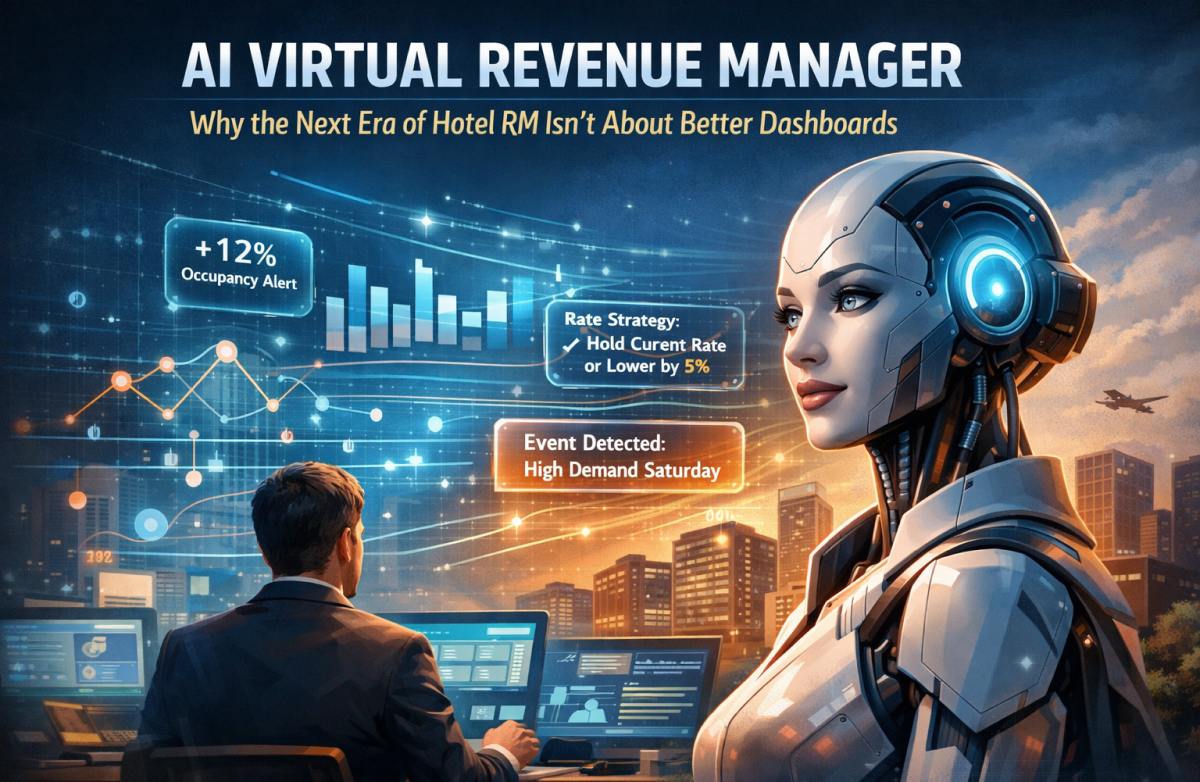
AI Virtual Revenue Manager: Why the Next Era of Hotel RM Isn’t About Better Dashboards

The next evolution in hotel revenue management isn’t a faster dashboard or a smarter pricing algorithm – it’s an AI…

Harikrishna Patel
Harikrishna Patel
Co-Founder, Hotel Switchboard
Revenue Management 09 March 2026

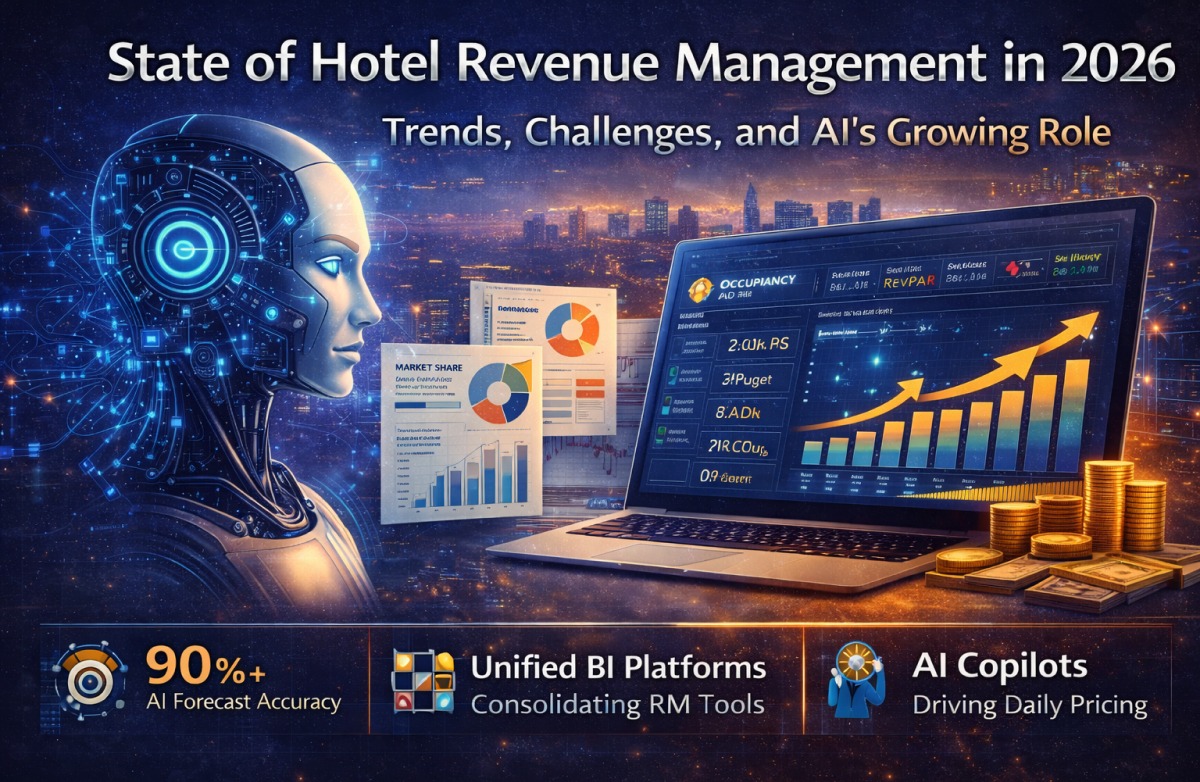
State of Hotel Revenue Management in 2026: Trends, Challenges, and AI’s Growing Role

Hotel revenue management in 2026 is defined by three fundamental shifts: AI-powered demand forecasting now achieves accuracy rates exceeding 90%,…

Harikrishna Patel
Harikrishna Patel
Co-Founder, Hotel Switchboard
Revenue Management 03 March 2026

Los Angeles World Cup 2026: Opening Match Hotel Pricing Strategy for SoFi Stadium

Los Angeles will host eight FIFA World Cup 2026 matches at SoFi Stadium, including the USA’s opening match against Paraguay…

Harikrishna Patel
Harikrishna Patel
Co-Founder, Hotel Switchboard
contact us

Ready to Transform Your Revenue Strategy?

Join the ranks of successful hoteliers who are leveraging AI to maximize their revenue. Get started today and see the difference our solution can make.