

Case Studies

View all

Discover how top brands achieved remarkable results with RevEvolve.

Explore strategies, successes, and insights from real-world examples.

RM Copilot Case Study: AI Revenue Management

How RM Copilot by RevEVOLVE eliminates 60–70% of hotel revenue managers' repetitive tasks, delivers +5–8% RevPAR lift, and enables one RM to manage 22+ properties. Full ROI case study with verified data.

RM Copilot vs Human Revenue Managers

Real hotel case study. AI optimized pricing and timing to deliver +13.7% RevPAR, near-sellout occupancy, and higher net revenue in just 10 days.

FAQs

Explore detailed answers to the most frequently asked questions about RevEvolve.

Get clear, step-by-step guidance to maximize the platform’s features and benefits.

Whitepapers

In-Depth Industry Research & Proven Strategies

Access comprehensive whitepapers packed with data-driven insights, expert analysis, and proven strategies to help you drive smarter decisions and sustainable revenue growth.

Explore expert insights, tips, and the latest trends in revenue management to boost your financial strategies and drive growth.

Booking Management | Harikrishna Patel October 17, 2025

Direct Bookings vs OTAs: Which is Best for Hotels?

Direct Bookings vs OTAs: Which is Best for Hotels?

As a hotel owner or manager, you’re constantly seeking the best way to fill your rooms and maximize revenue.
You’ve probably come across two key terms in the industry: Direct Bookings and OTAs (Online Travel Agencies).

But what do these really mean for your hotel, and which one is the best option to focus on?

The truth is, both direct bookings and OTAs have their place in a well-rounded hotel distribution strategy.
Each comes with its own set of pros and cons, and understanding how they impact your revenue and guest experience is key. Let’s break it down.

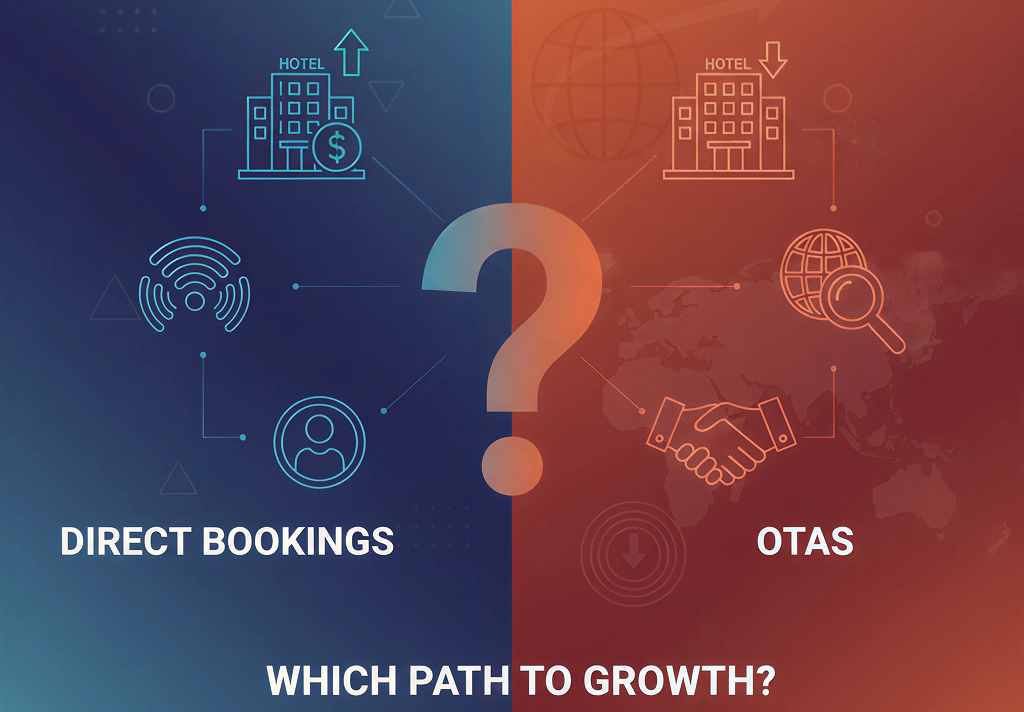
Direct Bookings vs OTAs: What’s the Difference?

Feature Direct Bookings OTAs (Online Travel Agencies)
Cost Lower (no commission fees) Higher (commission fees up to 20-25%)
Guest Data You control all guest data Limited access to guest information
Visibility Limited to your own website/marketing Huge global reach and visibility
Control Over Pricing Full control over rates and promotions Price parity clauses limit flexibility
Customer Loyalty Direct relationships, loyalty programs Less opportunity for building loyalty
Booking Volume Dependent on your marketing efforts Large volume of bookings from third parties

What Are the Benefits of Direct Bookings?

Direct bookings happen when a guest books directly through your hotel’s website, reservation system, or over the phone. These bookings are highly valuable for a number of reasons:

  1. Lower Distribution Costs: When you secure a booking directly, you don’t have to pay a commission to an OTA. This can be a significant cost saving. For instance, if your average room rate is $200, and you’re paying a 15% commission to an OTA, that’s a $30 commission fee per booking.
  2. Better Control Over Pricing: You set the prices, promotional offers, and discounts. Unlike OTAs that may require price parity (where your rate must match what’s listed on their site), you have full control to experiment with offers or last-minute discounts.
  3. Guest Loyalty and Data: Direct bookings allow you to establish a direct relationship with your guests. This means you can build loyalty programs, collect important guest preferences, and retarget them for future bookings through email marketing or special promotions.
  4. Why OTAs are Still Important

    While direct bookings are great, OTAs shouldn’t be dismissed altogether. Here’s why:

    1. Wider Reach: OTAs like Booking.com, Expedia, and Airbnb attract millions of users every month. By listing your hotel on these platforms, you gain access to a massive global audience, many of whom may not have found you otherwise.
    2. Increased Visibility: OTAs often rank highly in search engines, meaning your hotel could show up on the first page of results. This boosts visibility, especially if your hotel doesn’t have a strong brand presence yet.
    3. Ease of Use for Guests: OTAs provide a familiar and streamlined booking process. Many guests feel more comfortable using an OTA because they trust these platforms, and they typically offer flexible cancellation policies, which can be a big draw.

    What’s the Real Impact on Revenue?

    Whats-the-Real-Impact-on-Revenue
    The core difference between direct bookings and OTAs boils down to costs and control. Let’s take a look at the numbers.

    Statistics that Matter:

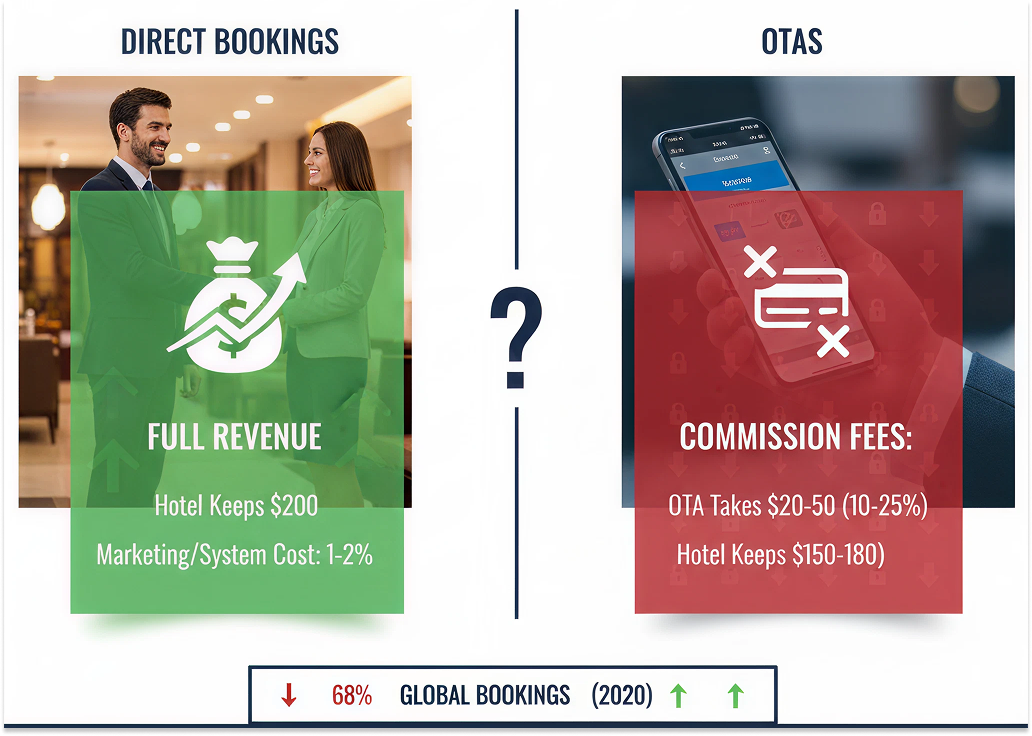
    • Hotel Commission Fees: OTAs often charge commission fees between 10-25%. For a $200 room, this means $20 – $50 per booking goes to the OTA.
    • Direct Booking Revenue: With direct bookings, that full $200 stays with the hotel, minus the cost of marketing and running the booking engine (usually 1-2%).
    • Marketing Efforts: To drive direct bookings, you’ll need to invest in your website, digital marketing, SEO, and possibly paid ads. In fact, hotels that focus on building brand awareness through direct bookings can reduce OTA dependency by as much as 20-30% over time.

    A study by Phocuswright in 2020 found that 68% of global hotel bookings were still made through OTAs, but direct bookings have been steadily rising, especially with the use of loyalty programs and better online marketing.

    The Balanced Approach: Using Both Channels Wisely

    It’s not about choosing one over the other. The most effective hotel distribution strategy uses a balanced approach, combining both direct bookings and OTAs. Here’s how you can do it:

    1. Leverage OTAs for Visibility and New Customers: Use OTAs to get exposure to a wider audience. Guests who may not have heard of your hotel will often use platforms like Booking.com or Expedia to find accommodations. Use these platforms to drive awareness and fill gaps during off-peak periods.
    2. Encourage Direct Bookings with Incentives: Once guests book through an OTA, try to incentivize them to book directly next time. Offer perks like discounted rates, free upgrades, or flexible cancellation policies when they book directly on your site. This can help build a repeat customer base, which is cheaper to retain than acquiring new customers.
    3. Dynamic Pricing and Revenue Management: Tools like Revevolve.ai can help you balance the two channels effectively. With a robust revenue management system like Revevolve.ai, you can implement dynamic pricing that adjusts room rates based on real-time demand, market trends, and competitor analysis. This can help you maximize both direct bookings and OTA bookings.

    How Revevolve.ai Can Help You Maximize Revenue

    By using a revenue management system like Revevolve.ai, you can optimize your distribution strategy in real-time. Here’s how Revevolve.ai can work with both direct bookings and OTAs:

    • Dynamic Pricing: Revevolve.ai uses machine learning algorithms to adjust your room rates automatically, ensuring you’re charging the right price at the right time, whether the booking is coming directly or through an OTA.
    • Rate Parity Monitoring: It ensures that your pricing remains competitive across all channels while meeting the requirements set by OTAs, helping you maintain rate parity without losing out on margin.
    • Demand Forecasting: The system’s forecasting capabilities give you insights into demand, allowing you to adjust your distribution channels accordingly for the best pricing and availability.

    Conclusion: The Best of Both Worlds

    The debate of Direct Bookings vs OTAs is not about choosing one over the other—it’s about knowing how to use each to your advantage. Direct bookings offer greater profitability, control, and long-term guest relationships, while OTAs provide reach and visibility, especially for new and international guests.

    With the right tools like Revevolve.ai, you can optimize both distribution channels, reduce dependency on OTAs, and drive more direct bookings. By understanding your hotel’s unique needs and combining the best of both worlds, you can boost revenue, build guest loyalty, and thrive in an increasingly competitive industry.

    If you’re ready to take your revenue strategy to the next level, contact us at Revevolve.ai to learn how our system can help you optimize both direct bookings and OTA channels for maximum profitability.

    Share on

    Harry Sheta is a hospitality technology entrepreneur focused on helping hotels make faster, smarter revenue decisions. As Co-Founder of Hotel Switchboard and the driving force behind RevEVOLVE, he works closely with hoteliers, revenue managers, and management companies to modernize how pricing, forecasting, and portfolio insights are delivered.

Latest Blogs

Booking Management 26 March 2026

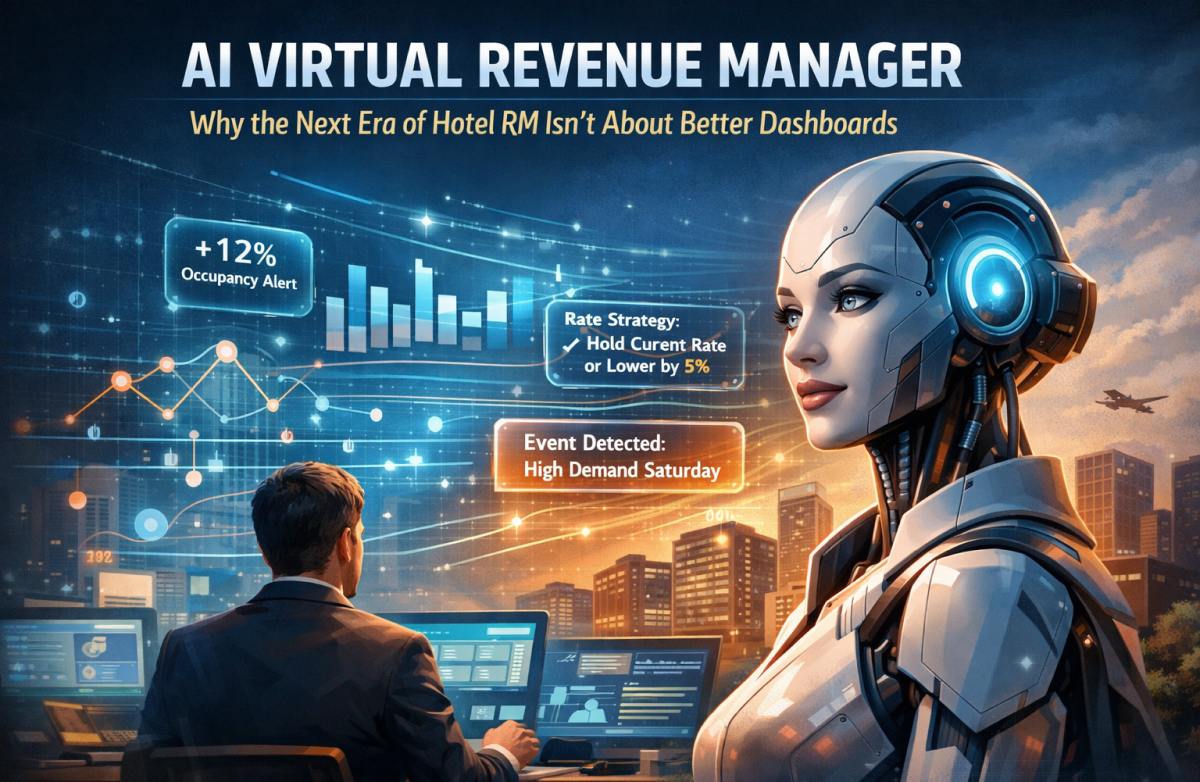
AI Virtual Revenue Manager: Why the Next Era of Hotel RM Isn’t About Better Dashboards

The next evolution in hotel revenue management isn’t a faster dashboard or a smarter pricing algorithm – it’s an AI…

Harikrishna Patel
Harikrishna Patel
Co-Founder, Hotel Switchboard
Booking Management 09 March 2026

State of Hotel Revenue Management in 2026: Trends, Challenges, and AI’s Growing Role

Hotel revenue management in 2026 is defined by three fundamental shifts: AI-powered demand forecasting now achieves accuracy rates exceeding 90%,…

Harikrishna Patel
Harikrishna Patel
Co-Founder, Hotel Switchboard
Booking Management 03 March 2026

Los Angeles World Cup 2026: Opening Match Hotel Pricing Strategy for SoFi Stadium

Los Angeles will host eight FIFA World Cup 2026 matches at SoFi Stadium, including the USA’s opening match against Paraguay…

Harikrishna Patel
Harikrishna Patel
Co-Founder, Hotel Switchboard
contact us

Ready to Transform Your Revenue Strategy?

Join the ranks of successful hoteliers who are leveraging AI to maximize their revenue. Get started today and see the difference our solution can make.